
About Public Schools

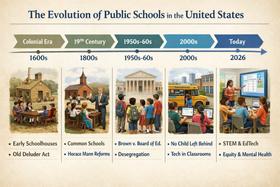
Here we cover the history of public schools, explain the various types and discuss their pros/cons. Learn more about technology on campus, health and nutrition issues, and the latest information related to a variety of student populations.

View the most popular articles in About Public Schools:

Does Your Child Have Dyslexia?

Updated
|
Does Your Child Have Dyslexia?
Learn about the symptoms of Dyslexia, as well as the action public schools are taking to provide Dyslexic students with appropriate academic support.

While many parents may believe that Dyslexia relates to an individual’s struggle with reading, the issue of Dyslexia can impact a child’s full development. Dyslexia symptoms include confusion with letters, numbers, reading, math, writing, and other difficulties – all of which can hinder a child’s academic progress.

Children coping with Dyslexia can face an array of adversities if their struggles are ignored. As studies demonstrate, students with Dyslexia who do not receive proper support may experience a decrease in self-esteem and a decline in positive behavior.

Thankfully, educators are finding new and innovative ways to help Dyslexic students learn at an optimal pace and level, and a rising number of schools are implementing targeted programs for support.

Dyslexia: The Signs and Struggles

Children coping with Dyslexia may reveal a wide variety of symptoms. For example, as Northeast Mississippi Daily Journal explains, children who struggle with Dyslexia often fail to fully comprehend both written material and numbers – leading to difficulties with other assignments. When these children struggle with academic tasks, they may begin to demonstrate signs of frustration, anger, or even depression.

According to the Mayo Clinic, other symptoms of Dyslexia may include the following:

  • Your child may start speaking later than other kids his age.
  • Your child adds new words very slowly to her vocabulary.

  • Rhyming may be difficult for your child.
  • Your child may have an inability to identify and recognize printed letters and words.

  • Your child’s reading ability is below the standard level expected for
. . .read more

4 Ways You Can Encourage Your Gifted Child’s Progress Outside of School

Updated
|
4 Ways You Can Encourage Your Gifted Child’s Progress Outside of School
Learn how parents of gifted children can find additional academic challenges and support programs both in and outside of public schools.

Many parents of talented and gifted kids, also known as TAG students, struggle with giving their children the appropriate levels of academic challenge and support. While public schools are striving to create greater TAG programs and courses, many parents are seeking out enrichment opportunities to supplement their child’s public school experience.

Parents looking for additional educational opportunities for TAG kids in public schools can take advantage of an array of community organizations, private institutions, events, and programs.

How Parents Can Support their TAG Child

As many TAG children may exhibit a greater desire for academic challenges and new opportunities, experts assert that parents should strive to balance a child’s academic activities with social ones. The balance will ensure that each student develops not only mentally, but personally and socially as well.

According to the U.S. Department of Education, Office of Educational Research and Improvement, most gifted kids generally benefit from spending time in settings amidst peers of similar abilities. Subsequently, many TAG children can benefit from skipping grades or engaging in accelerated classes. If TAG children stay in regular classrooms, they may need alternative opportunities to enhance their overall development.

TAG children require both mental stimulation and access to cognitively equal peer experiences. Therefore, parents, in addition to taking action with a child’s school, can also expose their child to alternative support opportunities as well.

This video from Raising Children's Network offers suggestions for supporting your talented and gifted child.

. . .read more

Is Your Gifted Student Being Supported in Public School?

Updated
|
Is Your Gifted Student Being Supported in Public School?
Learn about how your gifted child can thrive in public schools across the country who are enhancing their diverse gifted program opportunities.

While nearly all public schools are required to provide specific programs to help support the needs of struggling students, many public school leaders and parents assert that students with gifted abilities should be entitled to the same opportunities.

With the success of these special needs programs, which include one-on-one support, smaller class sizes, and modified curriculum options, many public schools are beginning to apply the same approach for gifted children, creating programs and classes that are targeted to their unique needs and abilities. “TAG” programs, which stand for “Talented and Gifted,” are growing in popularity in public schools. Proponents believe that TAG programs will help gifted students to enhance their own diverse learning abilities.

This video explains what gifted education entails.

Who are “Gifted” Students?

Each TAG student possesses unique and diverse abilities, and subsequently, many public schools and states have their own forms of “gifted” assessments. For example, the Des Moines Public Schools of Iowa adhere to a strict state-mandated law regarding the assessment and qualifications of TAG children. According to Des Moines Public Schools, TAG students are required to meet an array of criteria, including:

  • Students who require classroom/curriculum modifications, including differentiation, advanced class placements, and/or accelerated pacing.
  • Students who demonstrate a high potential for advanced learning.
  • Student performance scores within the 95th percentile on the Iowa Test of Basic Skills, the Cognitive Abilities Test, and/or the
. . .read more

Understanding Self-Contained Classrooms in Public Schools

Updated
|
Understanding Self-Contained Classrooms in Public Schools
Learn about the history of public schools incorporating self-contained classrooms, and whether they are right for your child.

In recent decades, public schools find themselves facing the greater needs of diverse student populations, with varying cognitive abilities, maturity levels, and academic strengths and weaknesses. While most typical elementary, middle, and high school students find themselves immersed in a classroom of twenty to thirty peers with one lead teacher, most public schools also have “self-contained” classrooms to provide alternative settings for enhanced academic support for the children whose needs cannot be fully met in a general education classroom.

What are Self-Contained Classrooms?

Unlike standard classrooms with a large number of peers, self-contained classrooms are typically smaller settings with a fewer number of students. Created to help foster enhanced support for students with special needs or specific difficulties, self-contained rooms are generally comprised of about ten students with unique struggles who are most commonly instructed by a lead teacher with a certification in special education. Self-contained classrooms will also have at least one paraeducator who provides instructional support under the guidance of the classroom teacher.

Due to recent curriculum shifts, some self-contained rooms cater to the diverse needs of students, such as those coping with autism spectrum disorder. A lead teacher, who is highly trained to help support students with autism, is able to provide greater assistance than what these students would typically receive in a classroom with a larger student-to-teacher ratio. Other examples of students who may be enrolled in self-contained rooms include students with developmental issues, behavioral concerns, students with specific academic struggles (i.e. in math,

. . .read more

Autism and Public School Assistance

Updated
|
Autism and Public School Assistance
Learn more about the recent research on autism spectrum disorder, and how public schools are working to help even young students with autism.

According to research and studies from the Centers for Disease Control, an average of 1 in 150 births results in a child who is diagnosed with autism. With this statistic, it is predicted that over 1.5 million Americans alone are potentially dealing with some form of disorder on the autism spectrum. While the cause is still unknown, autism is growing at a rate of an estimated 10-17 percent each year, as this disorder is now more prevalent and common than diabetes, pediatric cancer, and AIDS combined.

As Autism Spectrum Therapies explains, “Autism is a complex developmental disability […] (and) is considered a neurological disorder, though the specific cause is not known.” Today, medical experts and researchers can typically diagnose autism by a child’s second birthday; however, new breakthroughs are providing signs of autism in infants as early as just six months of age. As these medical breakthroughs continually advance, schools, parents, and the medical community are discovering new avenues for providing autistic children with full and inclusive support.

Public Schools and Encouraging Social Behavior

Since autism spectrum disorder is a neurological issue, each individual coping with autism expresses unique and different symptoms and indications. This condition is referred to as a “spectrum” because the degree and severity of each individual is subjectively specific. Most commonly, however, individuals suffering from autism spectrum disorder struggle with social and communicative skills, which are often most obviously realized once a child is exposed to social opportunities at school.

As Autism Spectrum

. . .read more

Recent Articles

Test Article, Image and Content
Test Test Test Test Test Test Test Test Test Test Test Test Test Test Test Test Test Test Test Test Test Test Test Test Test Test Test Test Test Test Test Test Test Test Test Test Test Test Test Test Test Test Test Test Test Test Test Test Test Test Test Test Test Test Test Test Test Test Test Test Test Test Test Test Test Test Test Test Test Test Test Test Test Test Test Test Test Test Test Test Test Test Test Test Test Test Test Test Test Test Test Test Test Test Test Test Test Test Test Test Test Test Test Test Test Test Test Test Test Test Test Test Test Test Test Test Test Test Test Test Test Test Test Test Test Test Test Test Test Test Test Test Test Test Test Test Test Test Test Test Test Test Test Test Test Test Test Test Test Test Test Test Test Test Test Test Test Test Test Test Test Test Test Test Test Test Test Test Test Test Test Test Test Test Test Test Test Test Test Test Test Test Test Test
10 Major Challenges Facing Public Schools in 2026
Explore 10 major challenges facing public schools in 2026, from funding gaps to teacher shortages, with insights for parents and educators.
Overview of the Funding of Public Schools (2026 Guide)
Learn how public schools are funded in 2026, including federal, state, and local sources, and what it means for equity and student outcomes.

About Public Schools

OVERVIEW OF PUBLIC SCHOOLS
A comprehensive look at the U.S. public school system, including history, governing bodies, funding, and services. Compare private, public and charter schools. Learn more about Magnet school programs and get tips on choosing the right school for your child.
TYPES OF PUBLIC SCHOOLS
Explore the different types of public schools, from charter to language immersion, and learn about the unique pros and cons of each type. Is a co-ed or single sex classroom best for your child? Charter school or magnet? Read expert advice and get valuable tips on the various public education programs available and how to choose what works best for your family.
TECHNOLOGY ON CAMPUS
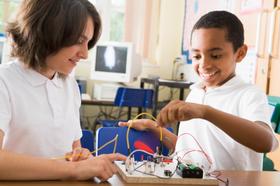
From eBooks to web cams, technology on campus continues to grow. Learn how the latest technology impacts your child’s education. Get tips on the best ways to integrate technology into education and stay abreast of the latest developments and challenges facing schools.
HEALTH AND NUTRITION AT SCHOOL
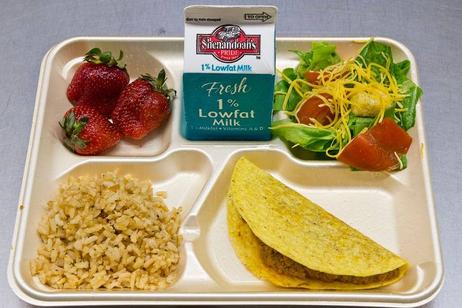
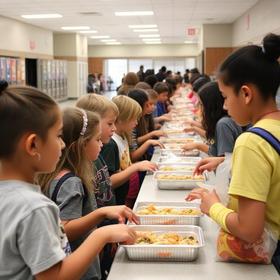
From vending machines to Jamie Oliver, bed bugs to tuberculosis, we provide an in-depth look at health and wellness in public schools. Help your kids stay healthy on campus and learn about current health epidemics, vaccination requirements, physical fitness programs and the latest food initiatives.
BACK TO SCHOOL
Learn more about preparing your child and wallet for a new school year. Inside you’ll find valuable advice to help your family prepare for the transition from swimsuits to school. While there is no tuition, public school education does not come without costs. Learn more about budgeting for a new school year and get great money saving tips.
STUDENT POPULATIONS
The latest trends, laws and resources for a variety of student populations. Every child has different needs, and this section offers helpful information for LGBT, special education, gifted, low-income, and minority students.