About Public Schools

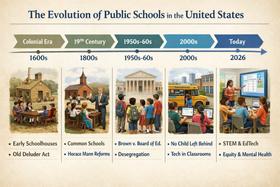
Here we cover the history of public schools, explain the various types and discuss their pros/cons. Learn more about technology on campus, health and nutrition issues, and the latest information related to a variety of student populations.

View the most popular articles in About Public Schools:

How Much E. Coli is in Public School Lunches?

Updated
|
How Much E. Coli is in Public School Lunches?
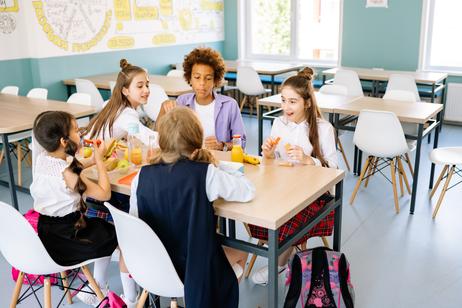
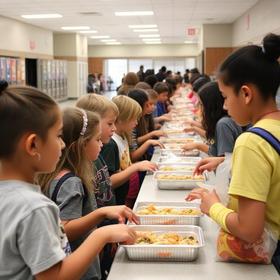
Public schools are being scrutinized for the potential presence of E. coli in cafeteria lunches. Learn more about the movement to make school lunches safe from recalls and E. coli outbreaks.

As E.coli outbreaks grow with regularity, public schools are being scrutinized for their lunches. According to Associated Press reports released in early November, the leader of the House Education and Labor Committee is investigating the health and safety of public school lunches.

After California’s representative, George Miller, brought attention to a deadly outbreak of E. coli that resulted in two deaths and dozens of reported illnesses, the government is working to ensure that school meals are protected from these dangers. Although there were no reported schools specifically impacted by the recent E. coli outbreak, Miller believes that the Government Accountability Office should take responsibility for ensuring that schools are not purchasing their meats and produce from contaminated facilities.

Are School Lunches Safe for Consumption?

In examining many political leaders’ demands for increased food safety measures in public schools, the Associated Press further reports that “Federal authorities had failed to tell schools about recalls of potentially tainted peanut products and canned vegetables, and cafeterias may have unknowingly served them to children.” Expanding on this concern, the Government Accountability Office also discovered that the U.S. Agriculture Department was inconsistent with its efforts in contacting schools about distributed food recalls.

While students from all socioeconomic backgrounds commonly purchase school lunches, an estimated 30 million students depend upon federally funded lunch and breakfast programs from school cafeterias as their only source of nutrition and sustenance. This fact alone has prompted community leaders to express their outrage over the

. . .read more

From Yoga to Online Gym Classes, Public Schools are Strengthening PE

Updated
|
From Yoga to Online Gym Classes, Public Schools are Strengthening PE
Learn about how public schools are implementing new forms of physical education instruction, which range from yoga classes to even online gym courses.

Today’s physical education classes have undergone great transformations and reforms. Yoga is replacing laps around the gym, aerobics takes the place of dodge ball, and some students can even take “online” gym class! Through these innovative changes at many public schools, students are rekindling their enthusiasm for physical education.

The Shakopee Public Schools explain some of the benefits of PE as follows:

  • "Improved Judgment: Quality physical education can influence moral development. Students have the opportunity to assume leadership, cooperate with others; question actions and regulations and accept responsibility for their own behavior.
  • Stress Reduction: Physical activity becomes an outlet for releasing tension and anxiety, and facilitates emotional stability and resilience.
  • Strengthened Peer Relationships: Physical education can be a major force in helping children socialize with others successfully and provides opportunities to learn positive people skills. Especially during late childhood and adolescence, being able to participate in dances, games and sports is an important part of peer culture.
  • Improved Self-confidence and Self-esteem: Physical education instills a stronger sense of self-worth in children based on their mastery of skills and concepts in physical activity. They can become more confident, assertive, independent and self-controlled.
  • Experience Setting Goals: Physical education provides children the opportunity to set and strive for personal, achievable goals."

Online Gym and Fitness Classes

For students who dread the thought of gym class, physical education may literally be just a few mouse clicks away. In fact, some Minneapolis public schools are offering online fitness courses to fulfill the physical education

. . .read more

Will Your Child’s School Shut Down to Prevent the Spread of H1N1?

Updated
|
Will Your Child’s School Shut Down to Prevent the Spread of H1N1?
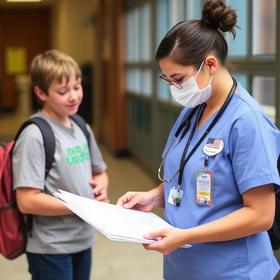
The CDC is encouraging school officials to avoid H1N1 closures, but what will your child's public school do? Learn more about what will prompt your child's school to take action to shut down the campus.

As we enter into the height of the flu season, the spread of the H1N1 virus has already closed down many public schools across the country. Although schools are preparing against campus outbreaks, will your child’s school take the necessary precautions to shut down the campus?

According to MSNBC, the Brookings Center on Social and Economic Dynamics estimates that closing down schools and daycares for an average of four weeks could ultimately cost between $10 billion and $47 billion. Shutting down campuses results in a loss of productivity and financial resources, while the schools simultaneously incur cleaning and reopening costs. Because closings can result in such severe costs, “The government is urging schools to close only as a last resort, such as when large numbers of kids or staffers come down with swine flu.”

While officials are hoping that schools can avoid the costly and dreaded inconveniences of school-wide closings, reality may not align with their ideals. According to reports, approximately 200 schools closed before early October 2009, which affected an estimated 80,000 students.


This video offers professional insight into the H1N1 influenza outbreak.

When a School Decides to Shut its Doors

What level of an outbreak will prompt a public school to shut its doors? While each school’s leaders may utilize a different set of criteria, it appears that most public schools will close the campus once 30% of their students have influenza

. . .read more

The Pros and Cons of Mandatory Gym Class in Public Schools

Updated
|
The Pros and Cons of Mandatory Gym Class in Public Schools
Leaders debate the pros and cons of mandatory gym classes in public schools. Learn more about the controversy and whether gym class should be a phenomenon of the past.

The Pros and Cons of Mandatory Gym Class in Public Schools

On the big screen, gym class is often depicted as a source of awkwardness and embarrassment, typically featuring challenges like rope climbing and timed push-ups.

  • However, gym class is much different now, and it is not surprising that today’s students and parents are questioning why it’s even a mandatory part of the day.
  • After all, according to an MSNBC investigation, researchers have found that the average high school gym class only keeps students physically active for an average of 16 minutes!
  • In a class period that is about 45 minutes long, that isn’t a lot of active time.
  • In today's educational landscape, where standardized test scores heavily influence teacher and school evaluations, districts cannot afford to perceive physical education as a 'waste' of valuable instructional time.
  • As such, PE classes have been cut so students can spend more time in core classes.

Supporters of mandatory gym programs contend that physical education classes have a wide range of benefits.

  • According to the National Association for Sport and Physical Education, physical education classes help children develop fine and gross motor skills, learn cooperation and teamwork, reduce stress, and improve self-confidence and self-esteem.
  • Furthermore, supporters argue that public schools have a responsibility to encourage children to enjoy a healthy and active lifestyle – especially as a rising number of young Americans are obese.
  • Activities that promote muscular strength, cardiovascular endurance, and flexibility, they
. . .read more

Can Sugar-Free Schools Improve Student Development And Grades?

Updated
|
Can Sugar-Free Schools Improve Student Development And Grades?
Learn about how sugar-free public schools enjoy improved student behavior, higher test scores, and healthier students.

While Americans are generally aware that a diet high in sugar can lead to diabetes and obesity, did you know that it can also negatively impact your child’s development? Some studies have found that children with high-sugar diets are more likely to engage in conflicts, have behavioral issues at school, and perform relatively poorly on standardized tests.

If these theories are true, then a diet free of sugar may be ideal for children, especially as students move through their formative years in public schools. Subsequently, some public school leaders have banned overly-sweetened foods for their students on campus. Remarkably, many of these “sugar-free” schools have reported significant changes and positive benefits!

In this video, Sarah Krieger reviews easy healthy school lunch ideas to include snack ideas for schools that have Nut and Sugar restrictions in place.

The Trend of Sugar-Free Schools

While many public schools have recently begun experimenting with sugar-free campuses, one particular elementary school in Georgia has enforced a no-sugar policy for nearly a decade. As CNN reports, Browns Mill Elementary School in Lithonia implemented a no-sugar policy for its K-5 students in the late 1990s. The elementary school prohibits bake sales, sodas, sweet snacks, and other unhealthy sugar-filled treats on campus.

In place of these options, students attending Browns Mill Elementary opt for healthier foods and beverages, such as low-fat milk, vegetables, and sandwiches served on

. . .read more

Recent Articles

Test Article, Image and Content
Test Test Test Test Test Test Test Test Test Test Test Test Test Test Test Test Test Test Test Test Test Test Test Test Test Test Test Test Test Test Test Test Test Test Test Test Test Test Test Test Test Test Test Test Test Test Test Test Test Test Test Test Test Test Test Test Test Test Test Test Test Test Test Test Test Test Test Test Test Test Test Test Test Test Test Test Test Test Test Test Test Test Test Test Test Test Test Test Test Test Test Test Test Test Test Test Test Test Test Test Test Test Test Test Test Test Test Test Test Test Test Test Test Test Test Test Test Test Test Test Test Test Test Test Test Test Test Test Test Test Test Test Test Test Test Test Test Test Test Test Test Test Test Test Test Test Test Test Test Test Test Test Test Test Test Test Test Test Test Test Test Test Test Test Test Test Test Test Test Test Test Test Test Test Test Test Test Test Test Test Test Test Test Test
10 Major Challenges Facing Public Schools in 2026
Explore 10 major challenges facing public schools in 2026, from funding gaps to teacher shortages, with insights for parents and educators.
Overview of the Funding of Public Schools (2026 Guide)
Learn how public schools are funded in 2026, including federal, state, and local sources, and what it means for equity and student outcomes.

About Public Schools

OVERVIEW OF PUBLIC SCHOOLS
A comprehensive look at the U.S. public school system, including history, governing bodies, funding, and services. Compare private, public and charter schools. Learn more about Magnet school programs and get tips on choosing the right school for your child.
TYPES OF PUBLIC SCHOOLS
Explore the different types of public schools, from charter to language immersion, and learn about the unique pros and cons of each type. Is a co-ed or single sex classroom best for your child? Charter school or magnet? Read expert advice and get valuable tips on the various public education programs available and how to choose what works best for your family.
TECHNOLOGY ON CAMPUS
From eBooks to web cams, technology on campus continues to grow. Learn how the latest technology impacts your child’s education. Get tips on the best ways to integrate technology into education and stay abreast of the latest developments and challenges facing schools.
HEALTH AND NUTRITION AT SCHOOL
From vending machines to Jamie Oliver, bed bugs to tuberculosis, we provide an in-depth look at health and wellness in public schools. Help your kids stay healthy on campus and learn about current health epidemics, vaccination requirements, physical fitness programs and the latest food initiatives.
BACK TO SCHOOL
Learn more about preparing your child and wallet for a new school year. Inside you’ll find valuable advice to help your family prepare for the transition from swimsuits to school. While there is no tuition, public school education does not come without costs. Learn more about budgeting for a new school year and get great money saving tips.
STUDENT POPULATIONS
The latest trends, laws and resources for a variety of student populations. Every child has different needs, and this section offers helpful information for LGBT, special education, gifted, low-income, and minority students.