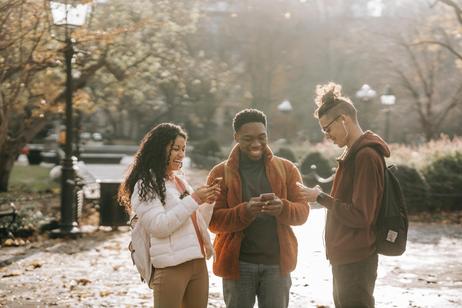
Cell phones have become an artificial appendage to many adults today, and teenagers have followed suit on this trend. However, many middle and high schools have adopted serious restrictions on cell phone use during school hours, with some schools still requiring students to keep cell phones completely out of sight as long as classes are in session. Other schools are beginning to lift many of those restrictions as teachers realize the learning potential inside these small handheld devices. While the specific rules depend on each school, the consensus is that cell phones, when used properly, can enhance the academic experience.
The Cell Phone Controversy
When students first began carrying cell phones, educators saw them primarily as a distraction in the classroom. Even more concerning was the fact that some students quickly learned how to use these devices to cheat on tests in class. The knee-jerk reaction by many schools was to ban cell phones altogether, creating policies that would allow for confiscating phones that were seen in halls or classrooms during school hours.
However, as phones have become a central part of daily life, many schools are rethinking their strict policies. Students and educators increasingly view cell phone restrictions as a barrier to integrating meaningful technology into the classroom. As more teachers find practical academic uses for these devices, support for more flexible policies has grown.
The Atlantic lists some of the potential benefits of cell phones in the classroom, including:
- Phones provide a high-tech, interactive alternative to lectures that fail to engage all students
- Phones can be used to note study reminders that the student can refer to at home
- Students can use phones to collaborate with one another
- Phones can help students connect with those in other schools or even other countries
- Students can record information and video onto phones to be referenced later
While the benefits are numerous, there is little argument that there are drawbacks to cell phones in class, primarily in their ability to distract students from their studies. Recent research shows that smartphone use among teens remains high, but now includes educational apps, collaboration tools, and academic communication in addition to social use. Schools continue to balance integrating technology into learning while minimizing distractions that can disrupt the classroom environment.
This video looks at the matter of allowing cell phones in the classroom.
Norfolk Public Schools Loosen Slightly
One Virginia public school district that has enforced one of the stricter cell phone policies in the past has loosened its rules somewhat this year. According to the Granby High School newspaper Spectator, the district will now allow students to bring their cell phones to school with them as long as they stay locked up in student lockers during school hours. This is a break from the past policy that completely prohibited cell phones at school.
Students who bring their phones to school may use the devices after school hours to alert parents and peers to plan changes after school. If phones are seen before that time, school staff will confiscate the device for two days. At that time, a parent of the phone's owner may come in to pick it up. A second infraction will result in the phone being taken for a month. Additional infractions will mean confiscation for the rest of the school year.
Lunchtime Use Now Allowed in Fairfax County
Another Virginia school district has relaxed former cell phone restrictions further by allowing students to use their phones between classes and at lunchtime. According to the Mount Vernon Patch, Fairfax County students can now carry their phones with them and send texts or make calls when not in the classroom. If teachers allow it, the phones may also be pulled out during class if their use is a proven enhancement to the learning experience. For example, an English teacher may allow students to look up words in the literary works they are reading, or a math teacher might encourage students to use the calculator function on their phones.
“The world we live in is based on technology,” Patricia Dutchie, a principal in Fairfax County, told the Patch. “That is what the students live on, and for students to be able to use their electronics during the day relaxes them.”
This video offers a teacher's strategy for allowing cell phone use.
King’s Fork High School Embraces Technology
A third county in Virginia has moved beyond accepting cell phone use to actually embracing it in some classrooms. Teachers at King’s Fork High School in Suffolk County are showing students how to use the devices to access information on the Internet, calculate complex math formulas, and even play subject-related games. The school has allowed teachers to bring the phones into their instruction time and has even provided training for teachers on how to do so effectively, according to Hampton Roads.
Technology is an integral part of modern education and everyday life. Schools preparing students for the future must find effective ways to incorporate it into the classroom. For many educators, cell phones offer practical tools to help students build the digital skills they will need beyond school.
Questions? Contact us on Facebook@publicschoolreview