About Public Schools

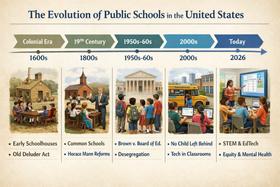
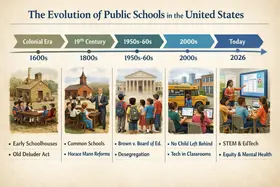
Here we cover the history of public schools, explain the various types and discuss their pros/cons. Learn more about technology on campus, health and nutrition issues, and the latest information related to a variety of student populations.

View the most popular articles in About Public Schools:

Transfer Pathways Between Public School Districts 2026

Updated
|
Transfer Pathways Between Public School Districts 2026
A 2026 guide to transfer pathways between public school districts, including open enrollment, legal rules, and tips for families.

Transfer pathways between public school districts have become increasingly flexible, transparent, and competitive in 2026. As families prioritize academic fit, safety, and specialized programs, more states and districts are expanding transfer options beyond traditional residential zoning.

This updated guide explains how transfer pathways between public school districts work today, what options families have, and how to successfully navigate the process.

Why Transfer Pathways Are Expanding in 2026

Public education is no longer strictly tied to a home address. Several forces are driving this shift:

  • Growth of school choice policies across states
  • Increased demand for specialized programs such as STEM and career pathways
  • Post-pandemic enrollment fluctuations
  • Equity initiatives aimed at widening access to high-performing schools

For example, districts investing heavily in STEM programs have become magnets for out-of-district families. If you're exploring these options, see our related analysis onThe Rise of STEM in Public Schools.

According to theNational Center for Education Statistics, school choice participation continues to rise nationwide, reflecting a broader trend toward flexible enrollment models.

Main Types of Transfer Pathways Between Public School Districts

Understanding your options is the first step. While policies vary by state, most transfer pathways fall into the following categories:

1. Open Enrollment (Interdistrict Choice)

Open enrollment allows students to attend public schools outside their assigned district, often without needing a specific reason.

Key features:

  • Available in many states, including Wisconsin, Colorado, and Arizona
  • Application windows are typically fixed
  • Acceptance depends on available space

Some states publish annual

. . .read more

The Rise of STEM in Public Schools: 2026 Update

Updated
|
The Rise of STEM in Public Schools: 2026 Update
Explore how STEM education in public schools is expanding in 2026, including new programs, workforce connections, and equity initiatives.

STEM education in public schools continues to grow rapidly in 2026. Across the United States, districts are expanding programs in science, technology, engineering, and mathematics to prepare students for a workforce increasingly driven by innovation and technical skills.

The rise of STEM in public schools is not simply about adding more science classes. It reflects a broader shift toward interdisciplinary learning, hands-on problem solving, and real-world applications. Robotics labs, coding curricula, maker spaces, and career-connected learning opportunities are becoming common in many districts.

This update examines the major trends shaping STEM education in public schools today, including expanded access, workforce partnerships, emerging technologies, and the continued effort to close equity gaps.

Why STEM Education Matters More Than Ever

The growing emphasis on STEM education in public schools is closely tied to labor market trends. Jobs in STEM fields continue to grow faster than many other sectors of the economy.

According to the U.S. Bureau of Labor Statistics, STEM occupations are projected to grow significantly through the next decade, particularly in computing, engineering, and data science. These fields also offer higher-than-average wages and strong long-term career prospects.

Many policymakers and educators believe that expanding STEM education early in a student’s academic journey can help prepare them for these opportunities. The National Science Foundation highlights that early exposure to STEM skills can improve problem-solving abilities, analytical thinking, and collaboration.

You can explore federal STEM initiatives through the National Science Foundation’s STEM education programs at
https://www.nsf.gov/education.

In response to these trends, public

. . .read more

Public Schools Supporting Student Mental Health in 2026

Updated
|
Public Schools Supporting Student Mental Health in 2026
Learn how public schools are supporting student mental health in 2026 through counseling programs, wellness initiatives, and expanded services.

Student mental health has become one of the most urgent issues facing American education. In recent years, rising rates of anxiety, depression, and stress among children and adolescents have pushed school leaders to rethink how public schools support emotional well-being.

In 2026, supporting student mental health is no longer viewed as an optional service. It is increasingly considered a core responsibility of public education. School districts across the country are expanding counseling services, building school-based health centers, implementing social-emotional learning (SEL) programs, and partnering with mental health providers to reach more students.

According to the Centers for Disease Control and Prevention, national youth surveys continue to show elevated levels of sadness, hopelessness, and anxiety among high school students. These findings have prompted federal, state, and local leaders to invest heavily in school-based mental health services.

This article examines what public schools are doing to support mental health in 2026 and how these efforts are shaping a healthier learning environment for students.

Why Student Mental Health Is a Priority in Public Schools

Educators increasingly recognize that mental health directly affects learning, attendance, and long-term success. Students struggling with anxiety, depression, or trauma often find it difficult to focus, complete assignments, or participate fully in school life.

Research from the National Institute of Mental Health shows that nearly one in five children experiences a mental health disorder each year. However, many never receive professional support.

Schools are uniquely

. . .read more

Four-Day School Week in 2026: Academic Outcomes and Costs

Updated
|
Four-Day School Week in 2026: Academic Outcomes and Costs
Learn how the four-day school week works in 2026, including research on academic outcomes, district cost savings, teacher retention, and the impact on families and communities.

Across the United States, the four-day school week has moved from a niche scheduling experiment to a widely discussed policy option. Originally adopted by small rural districts seeking budget relief, the model has expanded steadily. By the mid-2020s, more than 2,000 schools across multiple states had adopted a four-day schedule, with most districts eliminating either Monday or Friday while extending the remaining school days.

For districts facing teacher shortages, transportation costs, and declining enrollment, the schedule offers practical advantages. However, questions remain about academic outcomes, financial savings, and how the change affects families and communities.

This article examines how the four-day school week is functioning in 2026 and what current research reveals about its benefits and trade-offs.

What Is a Four-Day School Week?

Under a four-day school week, students attend classes four days per week with longer instructional days. Schools typically add 45–60 minutes to each school day to meet state instructional time requirements.

Most districts schedule school from Monday through Thursday, leaving Friday as a non-instructional day for students. Teachers may still use the fifth day for planning, professional development, or tutoring sessions.

For families evaluating how schedules shape the school experience, understanding daily routines can be helpful. Public School Review offers a detailed breakdown in its article A Typical Day in Public School: 2025 Guide, which explains how instructional time, class periods, and extracurricular activities are usually structured in American schools: Academic Outcomes: Mixed Evidence.

Research on the academic effects of a four-day school week

. . .read more

Why Public Schools Are Launching Marketing Campaigns in 2026

Updated
|
Why Public Schools Are Launching Marketing Campaigns in 2026
Discover why public schools are launching marketing campaigns in 2026 and how enrollment shifts, school choice, and funding pressures are driving change.

Why Public Schools Are Launching Marketing Campaigns

Public schools have traditionally relied on neighborhood boundaries and long-standing reputations to sustain enrollment. Today, that assumption no longer holds true. Across the country, districts are investing in branding, digital outreach, social media advertising, and community engagement strategies.

Why are public schools launching marketing campaigns? The answer lies in a combination of enrollment declines, increased school choice options, funding pressures, and a changing information landscape that has reshaped how families select schools.

In 2026, marketing is no longer viewed as optional or unconventional in public education. It is increasingly considered a strategic necessity.

Enrollment Declines and Funding Pressures

Public school funding is typically tied to enrollment. When student numbers drop, budgets follow.

According to data from the National Center for Education Statistics, public school enrollment has declined in many states since 2020, with some districts experiencing sustained losses through 2025 and into 2026. Contributing factors include:

  • Lower birth rates

  • Post-pandemic migration patterns

  • Growth of homeschooling

  • Expansion of charter schools and private school scholarships

  • Increased use of education savings accounts

Many districts have faced difficult choices, including school consolidations and staff reductions. As a result, superintendents are shifting from passive enrollment models to proactive outreach efforts.

In communities where open enrollment policies allow

. . .read more

Recent Articles

Test Article, Image and Content
Test Test Test Test Test Test Test Test Test Test Test Test Test Test Test Test Test Test Test Test Test Test Test Test Test Test Test Test Test Test Test Test Test Test Test Test Test Test Test Test Test Test Test Test Test Test Test Test Test Test Test Test Test Test Test Test Test Test Test Test Test Test Test Test Test Test Test Test Test Test Test Test Test Test Test Test Test Test Test Test Test Test Test Test Test Test Test Test Test Test Test Test Test Test Test Test Test Test Test Test Test Test Test Test Test Test Test Test Test Test Test Test Test Test Test Test Test Test Test Test Test Test Test Test Test Test Test Test Test Test Test Test Test Test Test Test Test Test Test Test Test Test Test Test Test Test Test Test Test Test Test Test Test Test Test Test Test Test Test Test Test Test Test Test Test Test Test Test Test Test Test Test Test Test Test Test Test Test Test Test Test Test Test Test
10 Major Challenges Facing Public Schools in 2026
Explore 10 major challenges facing public schools in 2026, from funding gaps to teacher shortages, with insights for parents and educators.
Overview of the Funding of Public Schools (2026 Guide)
Learn how public schools are funded in 2026, including federal, state, and local sources, and what it means for equity and student outcomes.

About Public Schools

OVERVIEW OF PUBLIC SCHOOLS
A comprehensive look at the U.S. public school system, including history, governing bodies, funding, and services. Compare private, public and charter schools. Learn more about Magnet school programs and get tips on choosing the right school for your child.


TYPES OF PUBLIC SCHOOLS
Explore the different types of public schools, from charter to language immersion, and learn about the unique pros and cons of each type. Is a co-ed or single sex classroom best for your child? Charter school or magnet? Read expert advice and get valuable tips on the various public education programs available and how to choose what works best for your family.
TECHNOLOGY ON CAMPUS
From eBooks to web cams, technology on campus continues to grow. Learn how the latest technology impacts your child’s education. Get tips on the best ways to integrate technology into education and stay abreast of the latest developments and challenges facing schools.
HEALTH AND NUTRITION AT SCHOOL
From vending machines to Jamie Oliver, bed bugs to tuberculosis, we provide an in-depth look at health and wellness in public schools. Help your kids stay healthy on campus and learn about current health epidemics, vaccination requirements, physical fitness programs and the latest food initiatives.
BACK TO SCHOOL
Learn more about preparing your child and wallet for a new school year. Inside you’ll find valuable advice to help your family prepare for the transition from swimsuits to school. While there is no tuition, public school education does not come without costs. Learn more about budgeting for a new school year and get great money saving tips.
STUDENT POPULATIONS
The latest trends, laws and resources for a variety of student populations. Every child has different needs, and this section offers helpful information for LGBT, special education, gifted, low-income, and minority students.