About Public Schools

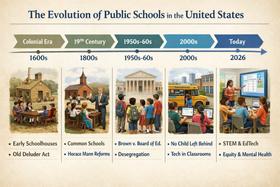
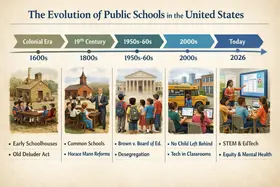
Here we cover the history of public schools, explain the various types and discuss their pros/cons. Learn more about technology on campus, health and nutrition issues, and the latest information related to a variety of student populations.

View the most popular articles in About Public Schools:

Understanding Public School Fees & Optional Costs Guide

Updated
|
Understanding Public School Fees & Optional Costs Guide
Discover what public school fees are required versus optional, with 2026 updates for parents, students, and educators on budgeting and planning.

Understanding Public School Fees & Optional Costs: What’s Mandatory vs. Optional

For many families, public education is synonymous with “free schooling.” However, the reality of public school fees & optional costs can be more complex. Across the United States in 2026, school districts continue to grapple with budgeting constraints, diverse local policies, and evolving educational expectations. For parents and caregivers, distinguishing between mandatory fees and optional costs is critical for effective financial planning and ensuring equitable access for all students.

This article provides an authoritative, parent-friendly guide to understanding public school fees & optional costs, what’s required versus what’s optional, and how to prepare financially without sacrificing educational opportunities.

Why Fees Exist in Public Schools

Public schools receive funding primarily through federal, state, and local taxes. Despite this base funding, many districts face budget pressures that lead them to charge fees for specific services and activities. These fees often help cover:

  • Materials and supplies

  • Transportation beyond standard routes

  • Extracurricular programs

  • Facility usage and maintenance

  • Specialized instructional programs

Understanding where these costs come from is the first step in discerning what families can expect to pay.

Core Differences: Mandatory Fees vs. Optional Costs

To make sense of school-related charges, it helps to categorize them:

Mandatory Fees
Charges that students must pay to participate in

. . .read more

Public School Schedule Options Explained for Families

Updated
|
Public School Schedule Options Explained for Families
Learn how public school schedule options like year-round calendars, block scheduling, and later start times affect students and families in 2026.

Public School Schedule Options: Year-Round, Block Scheduling, Later Start Times — What’s Best for Your Family?

Public school schedule options play an increasingly important role in how students learn, how families plan their days, and how districts respond to academic and social needs. In 2026, school systems across the United States continue to experiment with public school schedule options designed to improve learning outcomes, student wellness, and operational efficiency.

For parents comparing districts or considering enrollment alternatives, understanding public school schedule options is essential. This guide explains three of the most common public school schedule options used today: year-round schooling, block scheduling, and later school start times. Each option affects academics, child development, and family life in different ways.

Why Public School Schedule Options Matter

Public school schedule options influence far more than bell times. Research shows that scheduling affects student attention, sleep, academic performance, teacher collaboration, and even transportation costs. According to the National Center for Education Statistics, U.S. public schools serve more than 49 million students, making scheduling decisions a nationwide concern with wide-reaching implications.
https://nces.ed.gov/programs/coe/

As districts adapt to post-pandemic learning gaps and workforce challenges, public school schedule options are increasingly viewed as tools for improvement rather than fixed traditions.

Year-Round Schooling as a Public School Schedule Option

Year-round schooling is one of the most debated public school schedule options. Despite its name, year-round schooling does not usually increase the total number of instructional days. Instead,

. . .read more

New Public School Safety Protocols 2025–26 Guide

Updated
|
New Public School Safety Protocols 2025–26 Guide
Learn how new public school safety protocols for 2025–26 affect students, parents, and schools nationwide.

New Public School Safety Protocols in 2025–26: What Parents Should Know Before School Opens

As the 2025–26 academic year approaches, public school safety protocols are once again at the center of national attention. Districts across the country have updated public school safety protocols in response to evolving security risks, mental health concerns, and lessons learned from recent emergencies. For parents, understanding public school safety protocols before the first day of school is essential for making informed decisions and having productive conversations with school leaders.

This guide explains the most important public school safety protocols being implemented for the 2025–26 school year, why they matter, and how families can stay engaged. While specific policies vary by district and state, many public school safety protocols now share common features nationwide.

Why Public School Safety Protocols Are Changing

Public school safety protocols are not static. They evolve as schools respond to new research, emerging threats, and community expectations. In recent years, districts have expanded public school safety protocols to address:

  • Campus security and access control

  • Emergency preparedness and response

  • Student mental health and wellness

  • Digital safety and online threats

  • Coordination with local first responders

Federal guidance from the U.S. Department of Education, research from the U.S. Secret Service National Threat Assessment Center, and recommendations from the National Association of

. . .read more

How Technology Transforms Education in 2025

Updated
|
How Technology Transforms Education in 2025
Explore how technology shapes learning today, with updated data, policy context, trends, and real-world implications for students, educators, and families.

The Role of Technology in Education

Technology has reshaped education over the past decade, moving from supplemental tools to central components of teaching and learning. In 2025, digital tools, platforms, and artificial intelligence (AI) are influencing how educational content is delivered, accessed, and assessed for students from kindergarten through higher education. This article explores current trends, evidence, policy considerations, and the implications for parents, students, educators, and policymakers.

The Evolution of Educational Technology

Education technology, or EdTech, refers to the digital systems used to support instruction, learning, assessment, and administration. Initially limited to basic computer labs and projectors, technology in education now includes cloud-based platforms, adaptive learning systems, virtual and augmented reality, and generative AI tools.

The global EdTech market continues to expand rapidly, underscored by sustained investment and adoption. In 2025, the global market was valued at approximately $233.8 billion, with projections suggesting continued growth into the next decade. This expansion reflects increasing demand for online learning, mobile apps, and AI-enabled solutions in schools and universities around the world. Global Growth Insights

How Students and Teachers Use Technology

Classroom and remote learning environments now rely on a diverse ecosystem of technologies. A large majority of educators use digital tools in daily instruction, while students engage with technology for collaboration, research, and assessment.

Recent data indicate that nearly all teachers incorporate some form of digital resource in their classrooms, with many employing interactive lessons and platforms that

. . .read more

Public School Open House & Enrollment Season Guide for Parents

Updated
|
Public School Open House & Enrollment Season Guide for Parents
Learn what to ask at a public school open house during enrollment season, from academics to safety, to choose the right school for your child.

Public School Open House & Enrollment Season: What Parents Should Ask

Public school open house season is one of the most important times of year for families. Whether you are enrolling a kindergartener, transitioning to middle school, or considering a high school option, a public school open house offers a valuable opportunity to see classrooms, meet educators, and evaluate whether a school is the right fit for your child.

In 2025, public school enrollment continues to evolve. Districts are expanding magnet programs, investing in social emotional learning, and responding to parent demand for transparency around safety, academics, and student outcomes. A well planned visit to a public school open house can help families cut through marketing language and gather meaningful insights.

This guide outlines what parents should ask during a public school open house and enrollment season, how to prepare in advance, and how to compare schools effectively.

Why Public School Open House Season Matters

A public school open house is more than a tour. It is often the only chance to observe how a school operates during the academic year. During public school open house events, families can see class sizes, review curriculum materials, and assess school culture in person.

Enrollment decisions made during public school open house season often determine access to specialized programs, transportation eligibility, and extracurricular opportunities. Missing key information can limit options later.

According to data shared by the National Center for Education Statistics, family

. . .read more

Recent Articles

Test Article, Image and Content
Test Test Test Test Test Test Test Test Test Test Test Test Test Test Test Test Test Test Test Test Test Test Test Test Test Test Test Test Test Test Test Test Test Test Test Test Test Test Test Test Test Test Test Test Test Test Test Test Test Test Test Test Test Test Test Test Test Test Test Test Test Test Test Test Test Test Test Test Test Test Test Test Test Test Test Test Test Test Test Test Test Test Test Test Test Test Test Test Test Test Test Test Test Test Test Test Test Test Test Test Test Test Test Test Test Test Test Test Test Test Test Test Test Test Test Test Test Test Test Test Test Test Test Test Test Test Test Test Test Test Test Test Test Test Test Test Test Test Test Test Test Test Test Test Test Test Test Test Test Test Test Test Test Test Test Test Test Test Test Test Test Test Test Test Test Test Test Test Test Test Test Test Test Test Test Test Test Test Test Test Test Test Test Test
10 Major Challenges Facing Public Schools in 2026
Explore 10 major challenges facing public schools in 2026, from funding gaps to teacher shortages, with insights for parents and educators.
Overview of the Funding of Public Schools (2026 Guide)
Learn how public schools are funded in 2026, including federal, state, and local sources, and what it means for equity and student outcomes.

About Public Schools

OVERVIEW OF PUBLIC SCHOOLS
A comprehensive look at the U.S. public school system, including history, governing bodies, funding, and services. Compare private, public and charter schools. Learn more about Magnet school programs and get tips on choosing the right school for your child.
TYPES OF PUBLIC SCHOOLS
Explore the different types of public schools, from charter to language immersion, and learn about the unique pros and cons of each type. Is a co-ed or single sex classroom best for your child? Charter school or magnet? Read expert advice and get valuable tips on the various public education programs available and how to choose what works best for your family.
TECHNOLOGY ON CAMPUS
From eBooks to web cams, technology on campus continues to grow. Learn how the latest technology impacts your child’s education. Get tips on the best ways to integrate technology into education and stay abreast of the latest developments and challenges facing schools.
HEALTH AND NUTRITION AT SCHOOL
From vending machines to Jamie Oliver, bed bugs to tuberculosis, we provide an in-depth look at health and wellness in public schools. Help your kids stay healthy on campus and learn about current health epidemics, vaccination requirements, physical fitness programs and the latest food initiatives.
BACK TO SCHOOL
Learn more about preparing your child and wallet for a new school year. Inside you’ll find valuable advice to help your family prepare for the transition from swimsuits to school. While there is no tuition, public school education does not come without costs. Learn more about budgeting for a new school year and get great money saving tips.
STUDENT POPULATIONS
The latest trends, laws and resources for a variety of student populations. Every child has different needs, and this section offers helpful information for LGBT, special education, gifted, low-income, and minority students.