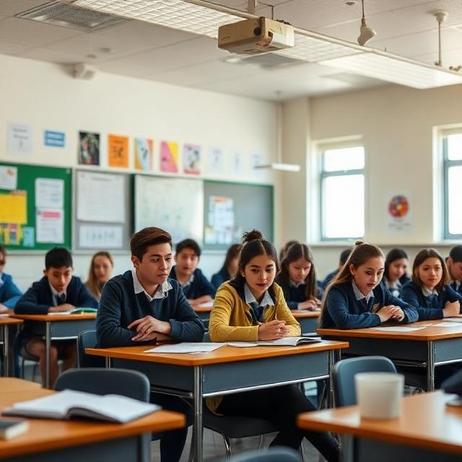
High School Issues

Learn more about issues specific to high school students. Get an overview of high school graduation rates, college readiness, career choice and social issues impacting teenagers in public schools.

View the most popular articles in High School Issues:

10 Major Challenges Facing Public Schools in 2026

Updated
|
10 Major Challenges Facing Public Schools in 2026
Explore 10 major challenges facing public schools in 2026, from funding gaps to teacher shortages, with insights for parents and educators.

Public schools remain the backbone of the American education system, serving more than 49 million students nationwide. Yet the list of challenges facing public schools continues to evolve. In 2026, these challenges are shaped by post-pandemic realities, rapid technological change, and shifting societal expectations.

For parents, educators, and policymakers, understanding these issues is essential to making informed decisions and advocating for meaningful improvements. Below is an updated look at the 10 major challenges facing public schools today, along with context and practical insights.

1. Unequal School Funding

Despite ongoing reform efforts, funding disparities persist across districts. Schools in affluent communities often benefit from stronger property tax bases, while under-resourced districts struggle to meet basic needs.

According to the National Center for Education Statistics, funding gaps remain one of the most significant contributors to inequitable outcomes.

These disparities affect:

  • Class sizes
  • Access to advanced coursework
  • Availability of extracurricular programs
  • Facility quality

For a deeper look at how funding impacts school quality, see Public School Funding: The Basics.

2. Teacher Shortages and Burnout

Teacher shortages have intensified since 2020 and remain a pressing concern in 2026. Many districts face difficulties recruiting and retaining qualified educators, particularly in:

  • STEM subjects
  • Special education
  • Rural and high-poverty areas

Burnout continues to drive attrition. Increased workloads, behavioral challenges, and administrative demands contribute to job dissatisfaction.

The U.S. Department of Education has identified teacher retention as a national priority, yet solutions vary widely by state and district.


3. Learning
. . .read more

What is the Impact of High School Graduation Rates?

Updated
|
What is the Impact of High School Graduation Rates?
The high school graduation rate is in a constant state of change and dropout rates affect more than the individual student. Read on to learn about factors influencing high school graduation rates and what schools can do to improve them.

Dropping out of high school is a decision that over 1 million American students make each year. Though it is a personal decision, it has a far-reaching impact not only on the student but on other students and the American education system.

Students who drop out of high school are more likely to live a life of periodic unemployment and have a higher rate of using government assistance. They tend to cycle in and out of the prison system more often than students who obtain a high school diploma, and their annual income is lower. But how does a student’s decision to drop out of high school affect others? And what impacts the rate at which students drop out of school?

In this article, we’ll explore the subject of high school graduation rates including the factors that influence them and their impact on schools and the American education system.

This video explains the effect of high school graduation rates on the American economy.

Why Do Students Drop Out of High School?

Roughly 7,000 students in the United States drop out of high school every day. For some time, the United States had some of the highest graduation rates of any developing country, but we have fallen to a ranking of 22 out of 27 countries.

High school is known for being one of the more unpleasant periods of a person’s

. . .read more

10 Ways to Use Summer to Boost Your College Application

Updated
|
10 Ways to Use Summer to Boost Your College Application
Summer break is a time to kick back and relax but it is also a great time to do activities that will boost your college applications. Keep reading to see how to boost your application this summer.

When the final bell rings on the last day of school, you’re probably ready to rush home and throw your bookbag in the closet until fall. As a high school student, summer is a time to relax and to take a break from studying, but if you plan to apply for college, you might want to consider using some of your summer break to boost your college application.

You don’t necessarily need to jump right into summer school, but there are some simple things you can do this summer to improve your college application. Keep reading to find out what they are.

Why Is It Important to Stay Busy Over the Summer?

Though it may be tempting to spend the whole summer sleeping in and spending time with friends, it’s important to keep one eye on your future. Your brain can definitely use a break when it comes to studying and stress, but don’t shut it down entirely for the next two months.

Staying busy and productive over the summer is important for a number of reasons. When it comes to college applications, however, it will show admissions officers that you’re serious about your education and your future. Something as simple as taking a summer school course or volunteering with a local charity shows a commitment to academic excellence and depth of character. Everything you do is an opportunity to show college admissions who you really are.

In addition to making yourself look better on a college

. . .read more

Choosing Between the SAT and ACT and How to Prepare

Updated
|
Choosing Between the SAT and ACT and How to Prepare
Taking the SAT or ACT is a major source of stress for high school students. Keep reading to learn how to choose the right test and how to prepare for it.

Choosing which colleges to apply to is a big decision and not one that should be made lightly. You have to consider factors such as class size, location, degree options, student-teacher ratios, and more. With so many options to choose from, things can get pretty stressful.

In all the flurry of trying to pick a college, you might forget about something even more important – college admissions exams. It doesn’t matter what schools you want to apply to if you don’t do well enough on your college admissions exams or, worse if you forget to take them entirely.

The SAT and the ACT are the two most popular college admissif2009 reportons exams, and both are universally accepted by colleges in the United States. If you’re like many high school students, you may be wondering what the difference is between these two tests and which one you should take, if not both of them. Keep reading to learn what every high schooler needs to know about these exams and how to prepare for them.

How Important Are Test Scores for College Admissions?

Most colleges and universities in the United States consider an applicant’s score on college admissions exams like the SAT and ACT. Many schools have a minimum score they will accept, though some schools weigh these scores more heavily than others. Though each school is different, the fact remains – scoring well on college admissions exams is important.

Though you should definitely do your best on the SAT

. . .read more

Why Every High School Student Should Apply for Financial Aid

Updated
|
Why Every High School Student Should Apply for Financial Aid
Each year, millions of students neglect to fill out the FAFSA and, in doing so, miss out on the chance to receive federal student aid. Keep reading to learn why every high school student should apply for financial aid, whether or not they qualify and regardless of their intention to use it.

The cost of college tuition rises each and every year. Though many students struggle to fund their college education, there are others who are lucky enough that they don’t need to borrow money for school. Even if a high school student doesn’t plan to borrow money to pay their tuition, however, it is still wise to fill out the Free Application for Federal Student Aid (FAFSA).

According to a new report sent out by the National Center for Education Statistics, there are many reasons why high school students fail to fill out the FAFSA, and some of them are due to misconceptions. Keep reading to learn why every high school student should apply for financial aid, whether or not they qualify, regardless of their intention to use it.

What is the Free Application for Federal Student Aid (FAFSA)?

According to recent data from the College Board, the average annual cost to attend an in-state public college is about $25,000. For private colleges, that price doubles to over $50,000. While there are certainly students whose families are wealthy enough to pay for tuition without assistance, most incoming college students require financial aid to fund their higher education.

The Free Application for Federal Student Aid (FAFSA) is the form colleges and universities use to determine a student’s eligibility for federal, state, and school-sponsored financial aid. This includes educational loans, grants, and work-study programs. Even if students only plan to take advantage of state or college-sponsored

. . .read more

Recent Articles

Test Article, Image and Content
Test Test Test Test Test Test Test Test Test Test Test Test Test Test Test Test Test Test Test Test Test Test Test Test Test Test Test Test Test Test Test Test Test Test Test Test Test Test Test Test Test Test Test Test Test Test Test Test Test Test Test Test Test Test Test Test Test Test Test Test Test Test Test Test Test Test Test Test Test Test Test Test Test Test Test Test Test Test Test Test Test Test Test Test Test Test Test Test Test Test Test Test Test Test Test Test Test Test Test Test Test Test Test Test Test Test Test Test Test Test Test Test Test Test Test Test Test Test Test Test Test Test Test Test Test Test Test Test Test Test Test Test Test Test Test Test Test Test Test Test Test Test Test Test Test Test Test Test Test Test Test Test Test Test Test Test Test Test Test Test Test Test Test Test Test Test Test Test Test Test Test Test Test Test Test Test Test Test Test Test Test Test Test Test
10 Major Challenges Facing Public Schools in 2026
Explore 10 major challenges facing public schools in 2026, from funding gaps to teacher shortages, with insights for parents and educators.
Overview of the Funding of Public Schools (2026 Guide)
Learn how public schools are funded in 2026, including federal, state, and local sources, and what it means for equity and student outcomes.