Parental Involvement from K-12

Learn how direct involvement in your child’s education can impact school performance. Get expert advice on how to get involved, learn why and when you need to talk to a teacher and ways to make changes on campus.

View the most popular articles in Parental Involvement from K-12:

Banishing the Phone-based Childhood

Updated
|
Banishing the Phone-based Childhood
The article advocates for a dramatic cultural shift - delaying kids' smartphone ownership until high school and social media access until 16, promoting more free play, and fostering a healthier, screen-free childhood through collective action.

Banishing the Phone-based Childhood

My late wife had a "brick," as those first Motorola cellphones were affectionately nicknamed. Back in the 90s, there were very few cell phones worldwide. Those early cell phones were bulky, expensive, and used primarily by business people. At that time, the pager was the only affordable signaling technology available to consumers. I remember keeping a pager in my belt when I ran with the local volunteer fire department. It wasn't until the 2000s that cell phones became affordable and widely available. The computing power of current smartphones is mind-boggling. That power, universal availability, affordability, and connectivity partnered with social media in all its forms have unleashed a phenomenon known as the phone-based childhood.

So, let's take a look at this phenomenon and its ramifications.

A professor from New York University says our society’snew phone-based childhoodis making young people sick and blocking their progress toward success during adulthood. He says weneed a dramatic cultural correction, and we need it now.Source: Niklaus Children's Hospital

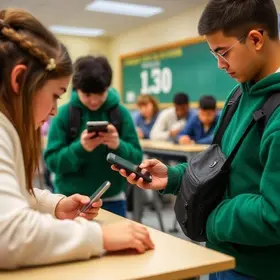
After smartphones replaced flip phones, young people had the Internet in their pockets. They could use their phones anywhere, anytime. And that is the root of the problem: Young people have become addicted to their phones. Social interaction, reading, and playing outside are the 1990s and 2000s artifacts.

Growing up, we went outside to play in good weather. We played board games or worked jigsaw puzzles when the weather was

. . .read more

Preparing for a Successful 'Back to School'

Updated
|
Preparing for a Successful 'Back to School'
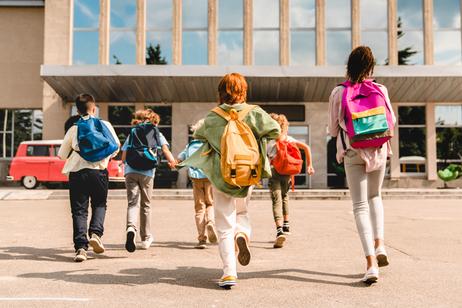
A one-stop guide for parents navigating the 'back to school' season, providing practical and effective strategies tailored to every grade level - from pre-K to high school.

The start of a new school year can bring a mix of emotions for parents and children - from excitement and anticipation to anxiety and fear of the unknown. It's also a time when parents have to buy school supplies, clothes, uniforms, smart devices, and more. This article, however, will focus on the transition from being away from school to resuming the structured routine that is the essence of a public school education.

With some preparation, navigating this transition smoothly and setting your child up for success in their new grade is possible. Here's how to tackle the 'back to school' season, regardless of your child's grade level or family's circumstances.

With fears and potential adaptations still ahead for parents and children, return to school is always a time when parents and teachers revisit what is important for children and how to best support their positive development. Marilyn Price-Mitchell

PK-Kindergarten

Building a Routine

For many children, starting pre-K or kindergarten is their first taste of a structured daily routine. Establishing and practicing routines - like a consistent bedtime and a morning routine that includes getting dressed, brushing teeth, and eating breakfast - can help your child adjust more easily to the school day. Creating a visual schedule or using alarms and reminders can be valuable in maintaining consistency for families with single parents or busy schedules.

Reading Readiness

Strengthening pre-literacy skills can set the foundation for academic success. Simple activities like reading to your child daily, practicing

. . .read more

Prevent Suicide

Updated
|
Prevent Suicide
988 is the suicide and crisis lifeline. Parents, teachers, and students can help prevent suicide once they know the warning signs.

The nation got a new Suicide Hotline on July 16, 2022. All somebody has to do is dial 988 to speak with a trained counselor. 24/7

988 has been designated as the new three-digit dialing code that will route callers to the National Suicide Prevention Lifeline (now known as the 988 Suicide & Crisis Lifeline), and is now active across the United States.

When people call, text, or chat 988, they will be connected to trained counselors that are part of the existing Lifeline network. These trained counselors will listen, understand how their problems are affecting them, provide support, and connect them to resources if necessary. Source: 988 Suicide and Crisis Lifeline

Before we discuss suicide in more detail, please print out the logo above and pin it to your kitchen noticeboard. Then, tell your children what 988 is and what it is used for, so they can help somebody in need the same way they do by knowing how and when to call 911.

This video explains how the 988 suicide and crisis lifeline works.

Suicide: The Subject Nobody Wants To Talk About

Suicide knows no age limits. It is shocking and tragic, no matter how or when it occurs. It scatters guilt widely as the friends and loved ones of the deceased wonder what they could have done to prevent somebody from taking her life. What subtle warning signs

. . .read more

A Parent’s Guide for the Upcoming School Year

Updated
|
A Parent’s Guide for the Upcoming School Year
Stay informed about today’s evolving school environment as education continues to adapt beyond the pandemic. This guide explores homeschooling options, modern classroom trends, and practical strategies to help your child succeed academically and emotionally throughout the school year.

The COVID-19 pandemic significantly reshaped K-12 education, accelerating the adoption of remote learning and prompting lasting changes in how schools operate. While schools have since returned to consistent in-person instruction, many districts now incorporate digital tools and more flexible learning options. Today, parents are focused on understanding how these changes affect the school experience and how best to support their children.

In this article, we explore what families can expect from today’s school environment, including evolving classroom models, the pros and cons of homeschooling, and practical strategies for supporting your child throughout the school year.

Will Schools Be Open in the Fall?

Today, most schools operate with full in-person instruction, and widespread closures are no longer expected. While staffing and resource challenges may still affect some districts, the overall structure of schooling has stabilized.

While the pandemic significantly impacted education, schools have since adapted to more stable operations. Decisions about curriculum, scheduling, and student support continue to be made at the state and district levels.

Most districts now follow traditional schedules, though some offer optional virtual or hybrid learning. The focus has shifted toward academic recovery, student support, and integrating technology into everyday instruction.

Today’s school experience is more stable than in recent years, but it continues to evolve with new learning models and expectations. Depending on your family’s needs, you may still consider alternatives like homeschooling for greater flexibility and personalization.

Should You Consider Homeschooling Your Child?

Schools across the country

. . .read more

How to Help Your Child Succeed in and Out of School

Updated
|
How to Help Your Child Succeed in and Out of School
Your child’s education is not just his teacher’s responsibility. As a parent, you can supplement your child’s education at home to help him succeed in school.

Kids soak up knowledge from everything around them. Even before they step into school, you're their very first teacher, mom or dad! Learning doesn't stop with age - it's a lifelong journey. So, if you want your kid to be sharp and savvy, it's time to get serious about their education inside and outside the classroom.

When you ignite a passion for learning in your child, every day becomes a chance to discover something new. In this article, we'll dig into how you can help your kid make the most of their education.. We'll talk about tailoring learning to their style and adding extra learning at home. Let's dive in!

Understanding Your Child’s Learning Style

For many years, educators discussed the idea of “learning styles,” suggesting that children learn best through specific methods such as visual or auditory instruction. Today, research indicates that while students may have preferences in how they engage with information, effective learning usually involves a combination of approaches. Children benefit from seeing, hearing, discussing, and applying ideas in different ways. By observing how your child responds to different activities and working with their teacher, you can help support strategies that keep them engaged and reinforce learning both at school and at home.

Instead of focusing on rigid learning style categories, educators today often discuss different ways students engage with information. The following examples describe common ways children interact with learning activities.

  1. Visual (Spatial) – This style learns best when they have an image
. . .read more

Recent Articles

Test Article, Image and Content
Test Test Test Test Test Test Test Test Test Test Test Test Test Test Test Test Test Test Test Test Test Test Test Test Test Test Test Test Test Test Test Test Test Test Test Test Test Test Test Test Test Test Test Test Test Test Test Test Test Test Test Test Test Test Test Test Test Test Test Test Test Test Test Test Test Test Test Test Test Test Test Test Test Test Test Test Test Test Test Test Test Test Test Test Test Test Test Test Test Test Test Test Test Test Test Test Test Test Test Test Test Test Test Test Test Test Test Test Test Test Test Test Test Test Test Test Test Test Test Test Test Test Test Test Test Test Test Test Test Test Test Test Test Test Test Test Test Test Test Test Test Test Test Test Test Test Test Test Test Test Test Test Test Test Test Test Test Test Test Test Test Test Test Test Test Test Test Test Test Test Test Test Test Test Test Test Test Test Test Test Test Test Test Test
10 Major Challenges Facing Public Schools in 2026
Explore 10 major challenges facing public schools in 2026, from funding gaps to teacher shortages, with insights for parents and educators.
Overview of the Funding of Public Schools (2026 Guide)
Learn how public schools are funded in 2026, including federal, state, and local sources, and what it means for equity and student outcomes.