Deprecated: Return type of Phpfastcache\Util\ArrayObject::offsetGet($offset) should either be compatible with ArrayAccess::offsetGet(mixed $offset): mixed, or the #[\ReturnTypeWillChange] attribute should be used to temporarily suppress the notice in /home/devzheng/workspace/psr/vendor/phpfastcache/phpfastcache/lib/Phpfastcache/Util/ArrayObject.php on line 106

Deprecated: Return type of Phpfastcache\Util\ArrayObject::offsetSet($offset, $value) should either be compatible with ArrayAccess::offsetSet(mixed $offset, mixed $value): void, or the #[\ReturnTypeWillChange] attribute should be used to temporarily suppress the notice in /home/devzheng/workspace/psr/vendor/phpfastcache/phpfastcache/lib/Phpfastcache/Util/ArrayObject.php on line 115

Deprecated: Return type of Phpfastcache\Util\ArrayObject::offsetUnset($offset) should either be compatible with ArrayAccess::offsetUnset(mixed $offset): void, or the #[\ReturnTypeWillChange] attribute should be used to temporarily suppress the notice in /home/devzheng/workspace/psr/vendor/phpfastcache/phpfastcache/lib/Phpfastcache/Util/ArrayObject.php on line 130

Deprecated: Return type of Phpfastcache\Util\ArrayObject::current() should either be compatible with Iterator::current(): mixed, or the #[\ReturnTypeWillChange] attribute should be used to temporarily suppress the notice in /home/devzheng/workspace/psr/vendor/phpfastcache/phpfastcache/lib/Phpfastcache/Util/ArrayObject.php on line 48

Deprecated: Return type of Phpfastcache\Util\ArrayObject::next() should either be compatible with Iterator::next(): void, or the #[\ReturnTypeWillChange] attribute should be used to temporarily suppress the notice in /home/devzheng/workspace/psr/vendor/phpfastcache/phpfastcache/lib/Phpfastcache/Util/ArrayObject.php on line 56

Deprecated: Return type of Phpfastcache\Util\ArrayObject::rewind() should either be compatible with Iterator::rewind(): void, or the #[\ReturnTypeWillChange] attribute should be used to temporarily suppress the notice in /home/devzheng/workspace/psr/vendor/phpfastcache/phpfastcache/lib/Phpfastcache/Util/ArrayObject.php on line 80

Deprecated: Return type of Phpfastcache\Drivers\Memcached\Item::jsonSerialize() should either be compatible with JsonSerializable::jsonSerialize(): mixed, or the #[\ReturnTypeWillChange] attribute should be used to temporarily suppress the notice in /home/devzheng/workspace/psr/vendor/phpfastcache/phpfastcache/lib/Phpfastcache/Core/Item/ItemExtendedTrait.php on line 438
Public School Articles - Page 97
Updated
|
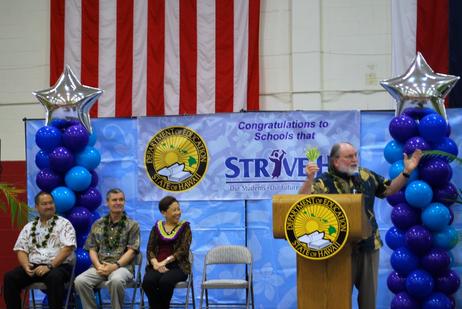
Hawaii Schools Receive $1 Million in Award Money
We look at Hawaii’s Department of Education Strive Hi program that has awarded $1 million to schools throughout the Islands for their high academic achievement efforts.

Schools in one of the largest school districts in the country recently celebrated the fruit of their labor, with cash that can be used to further improvements at high-achieving schools. The Hawaii State Department of Education distributed grant funding to deserving schools that showed marked improvement and academic progress. The grants were originally offered under the Strive HI awards initiative, supported in part by federal Race to the Top funding received during the Obama administration.

In 2026, Hawaii public schools continue using school improvement models focused on academic growth, student achievement, attendance, graduation rates, and college and career readiness. The state’s accountability system has evolved significantly since the original Strive HI framework, but the emphasis on rewarding measurable school progress remains. Many districts nationwide are also adopting similar strategies tied to education funding reform, expanded public school improvement strategies, and student achievement initiatives.

According to reports from the Hawaii Department of Education, schools were originally chosen for the awards based on academic progress over consecutive years, allowing hard-working schools to receive additional funding to continue improvement efforts. Award amounts ranged from $12,500 to $100,000 for the highest-performing schools throughout the islands.

“We are proud to be able to financially recognize the hard work of the teachers, students and staff of these schools,” Kathryn Matayoshi, superintendent of Hawaii schools at the time, stated in the original news release. “The Strive HI awards reflect that the department is not only focused on intervention


. . .read more

Controversial Curriculum Taught in Public Schools

Updated
|
Controversial Curriculum Taught in Public Schools
We examine a number of controversial curriculum choices in public schools nationwide, from yoga and religion to sex-ed for kindergarteners.

Parents send their children to school daily with the full expectation of learning literature, mathematics, science, and history – subjects that will help them advance their life goals and ambitions. However, in districts nationwide, children learn subjects their parents disagree with. When such a controversial curriculum is taught in public schools today, it typically raises concerns among students, parents, and teachers. Check out these three subjects that have come under significant scrutiny – and even wrath – in some schools today.

Does Bible Teaching Violate Separation of Church and State?

The teaching of the Bible as literature has ruffled the feathers of educators, parents, and lawmakers in school districts around the country. Texas is currently grappling with the debate over introducing the Bible into schools as a new study from Southern Methodist University explores the constitutionality of such teaching. The study, authored by Dr. Mark A. Chancey, targets a class at Eastland High School in Eastland, Texas.

According to the New York Times, Dr. Chancey has used this new study to examine a class taught by Gay Hart at Eastland. Based upon Dr. Chancey’s assessment, the Eastlan class would not pass constitutional muster. Hart’s class explores the Bible and other religious teachings, including Judaism and Muslimism. However, the Bible is the primary focus of the class. Hart sent Dr. Chancey some of her teaching material to participate in the study. However, Hart stated that Dr. Chancey never visited her class before making his assessments.

. . .read more

What the Sequester Means for Public Schools

Updated
|
What the Sequester Means for Public Schools
Now that the sequester is a reality for the U.S., we take a look at how spending cuts will impact public schools across the country.

Now that the sequester has officially gone into effect, many are wondering how spending cuts will impact the public school system across the country. While federal funding cuts would not take effect for any schools until the new school year begins in the fall, concerns are now in educators', parents', students', and community members' minds. In fact, some districts are already taking steps to make appropriate adjustments in case federal funding does not come as planned.

What is the Sequester?

The sequester is a series of budget cuts that were enacted by the Budget Control Act and signed by President Obama in August 2011. The budget cuts were designed to incentivize Congress to find a solution to the country’s debt crisis. They were never meant to go into effect, but a stalemate in Congress has led to the implementation of the dreaded sequester.

According to the Huffington Post, the sequester impacts most current government spending. The U.S. military and national security operations will see about $550 billion of the $1.2 trillion in cuts. The rest will be cut from domestic programs, including unemployment benefits, health care – and education. Due to how the sequester was set up, some areas of federal funding, such as Medicare, social security, and money spent on wars, will see no impact.

The sequester took effect on March 1 at 11:59 p.m. Congress could still minimize the impact of the new law by coming to an agreement on a different approach to balancing the

. . .read more

Denver Public Schools Buck Trend, Plug School-to-Prison Pipeline

Updated
|
Denver Public Schools Buck Trend, Plug School-to-Prison Pipeline
The article discusses Denver Public Schools' efforts to address the school-to-prison pipeline issue. It highlights the district's innovative approaches to discipline, support systems for at-risk students, and the positive outcomes of these initiatives in reducing the criminalization of student behavior.

Denver Public Schools Buck Trend, Plug School-to-Prison Pipeline

At a time when many public schools across the country are working to add a police presence to the school environment, Denver Public Schools is seeking to do the opposite. As one of the largest school districts in the country, in a state that has seen more than its share of violence, this system is bucking the trend in an effort to plug the school-to-prison pipeline. With the help of a local activist group, the school district is changing its policies on school discipline and the involvement of the criminal justice system within the school system.

New Policy, New Discipline Procedures

Education Week reports that Denver Public Schools recently signed an agreement with the local police department to change the way discipline is handled within the schools in the 84,000-student district. At a time when many school districts across the country are adding police in response to the recent Newtown tragedy, DPS is stepping back its police influence in its schools. The agreement states that school resource officers (Denver police officers working in the schools) must make a distinction between crimes committed in schools and incidents that can be handled by traditional means of school discipline.

In addition to this new policy, school resource officers must undergo annual training to help them stay up to date on these issues. School administrators will also be required to participate in the training, to ensure everyone involved in

. . .read more

Milwaukee Schools: Voucher Debate

Updated
|
Milwaukee Schools: Voucher Debate
We report on the latest developments in the voucher debate in Milwaukee, as well as the pros and cons of the voucher system proposed by Governor Scott Walker.

One of the largest school districts in the country is heating up the voucher debate, with recent budget proposals by the governor. Wisconsin Governor Scott Walker has proposed an increase in funding to expand the voucher program beyond Milwaukee and Racine to other areas of the state. In addition, more money would go into the voucher schools already operating in the Milwaukee and Racine school districts. At the same time, Walker wants funding for public schools to remain the same for the next two years. His proposals have rankled many Wisconsin residents and taken the voucher debate to a whole new level.

This video reports on the heated opinions about Wisconsin's voucher program.

Details of the New Proposal

According to the Journal Sentinel, Walker wants to increase taxpayer funding to voucher schools by at least nine percent. On the flip side, Walker is asking for a one-percent increase in funding for state general aid, with provisions that would require public schools to ask for a referendum if they wanted to increase classroom resources. This new proposal would mean around $73 million in additional funding for the small voucher school network and around $129.2 million for the much larger public school system. The discrepancy in the numbers has some Wisconsin residents crying foul.

Walker’s plan would allow new districts to open up voucher programs if the district has at least

. . .read more

Recent Articles

Media Literacy as a Core Skill: How to Tell if a School Teaches It Well
Learn how to evaluate whether a public school teaches media literacy effectively, from fact-checking and source evaluation to digital citizenship and critical thinking.
Screen Time, Paper Learning, and the New Back-to-Basics Debate
Explore why some public schools are reducing screen time, bringing back paper learning, and rethinking the balance between technology and traditional instruction.
Student Data, AI Tools, and Privacy: Questions to Ask Your District
Learn how public schools use AI, protect student data, and the key privacy questions every parent should ask their school district in 2026.