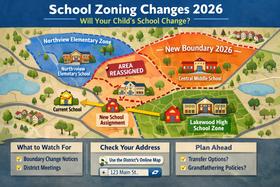
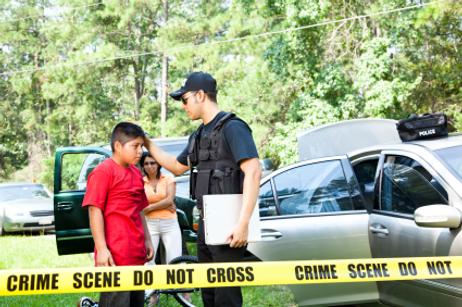
Chicago Public Schools have taken more than their share of beatings in recent months, with the latest blow coming in the form of school closures of underperforming schools. Parents have protested the decision by school officials and Mayor Rahm Emanuel, saying children previously attending closed schools will now have to travel further and through dangerous neighborhoods to get to class every day. In hopes of countering some of those fears, Mayor Emanuel has followed the announcement of school closures with an announcement of a new safety program designed to keep kids safe in the classroom and the community.
The Unveiling of the New CompStat Safety Program
Last week, Mayor Emanuel unveiled the new safety program, which is modeled after the CompStat program first used in New York in 1994. According to a report in the Chicago Sun-Times, the program is designed to hold law enforcement officers accountable and accurately analyze crime statistics in surrounding neighborhoods at weekly meetings. While this program was originally developed to enhance law enforcement throughout New York City, the model can also be easily customized to the school and community environment.
Chicago Police Superintendent Garry McCarthy participated in the New York CompStat program for seven years while serving as head of the crime strategy for the NYPD. Now, he brings his experience to the Chicago program in hopes of uniting law enforcement, education officials, and religious leaders in weekly accountability and strategizing sessions to keep Chicago kids safer. Through