Deprecated: Return type of Phpfastcache\Util\ArrayObject::offsetGet($offset) should either be compatible with ArrayAccess::offsetGet(mixed $offset): mixed, or the #[\ReturnTypeWillChange] attribute should be used to temporarily suppress the notice in /home/devzheng/workspace/psr/vendor/phpfastcache/phpfastcache/lib/Phpfastcache/Util/ArrayObject.php on line 106

Deprecated: Return type of Phpfastcache\Util\ArrayObject::offsetSet($offset, $value) should either be compatible with ArrayAccess::offsetSet(mixed $offset, mixed $value): void, or the #[\ReturnTypeWillChange] attribute should be used to temporarily suppress the notice in /home/devzheng/workspace/psr/vendor/phpfastcache/phpfastcache/lib/Phpfastcache/Util/ArrayObject.php on line 115

Deprecated: Return type of Phpfastcache\Util\ArrayObject::offsetUnset($offset) should either be compatible with ArrayAccess::offsetUnset(mixed $offset): void, or the #[\ReturnTypeWillChange] attribute should be used to temporarily suppress the notice in /home/devzheng/workspace/psr/vendor/phpfastcache/phpfastcache/lib/Phpfastcache/Util/ArrayObject.php on line 130

Deprecated: Return type of Phpfastcache\Util\ArrayObject::current() should either be compatible with Iterator::current(): mixed, or the #[\ReturnTypeWillChange] attribute should be used to temporarily suppress the notice in /home/devzheng/workspace/psr/vendor/phpfastcache/phpfastcache/lib/Phpfastcache/Util/ArrayObject.php on line 48

Deprecated: Return type of Phpfastcache\Util\ArrayObject::next() should either be compatible with Iterator::next(): void, or the #[\ReturnTypeWillChange] attribute should be used to temporarily suppress the notice in /home/devzheng/workspace/psr/vendor/phpfastcache/phpfastcache/lib/Phpfastcache/Util/ArrayObject.php on line 56

Deprecated: Return type of Phpfastcache\Util\ArrayObject::rewind() should either be compatible with Iterator::rewind(): void, or the #[\ReturnTypeWillChange] attribute should be used to temporarily suppress the notice in /home/devzheng/workspace/psr/vendor/phpfastcache/phpfastcache/lib/Phpfastcache/Util/ArrayObject.php on line 80

Deprecated: Return type of Phpfastcache\Drivers\Memcached\Item::jsonSerialize() should either be compatible with JsonSerializable::jsonSerialize(): mixed, or the #[\ReturnTypeWillChange] attribute should be used to temporarily suppress the notice in /home/devzheng/workspace/psr/vendor/phpfastcache/phpfastcache/lib/Phpfastcache/Core/Item/ItemExtendedTrait.php on line 438
Teaching

Teaching

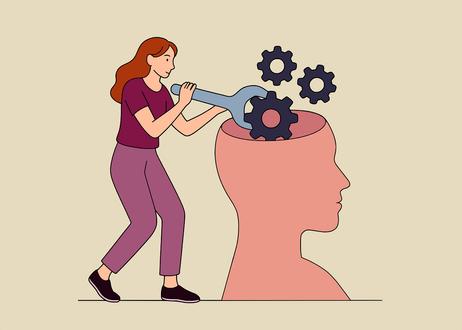
Career Readiness in Public Schools Beyond Tests

Updated
|
Career Readiness in Public Schools Beyond Tests
How public schools can teach career readiness skills beyond standardized tests—preparing students for real-world success.

Career Readiness in Public Schools: Teaching Skills Beyond Standardized Tests

In 2025, discussions about education reform increasingly emphasize that career readiness must extend beyond test scores if public schools are to truly prepare students for life after graduation. For many students, success hinges not only on algebra or reading skills, but also on communication, critical thinking, adaptability, and real-world problem solving. To close the “skills gap,” public schools must adopt new approaches and metrics—and equip educators, students, and communities for a future that values more than standardized test performance.

This article explores why career readiness matters, what skills matter most, how public schools can integrate them, and how to evaluate success beyond test results.

Why Move Beyond Standardized Testing?

The Limits of Tests as a Sole Metric

Standardized tests remain deeply embedded in public school accountability systems. Yet as critics and reformers note, overreliance on such tests distorts instruction, narrows curricula, and fails to reflect the full range of student readiness. Education Week The problem is not testing itself, but making tests the final arbiter of success—even when they capture only a fraction of what students must do in life or work.

The Skills Gap & Employer Expectations

Employers routinely report that recent graduates lack key “employability” or “career readiness” skills—communication, teamwork, initiative, digital literacy, self-management. icevonline.com Schools that focus narrowly on test preparation risk leaving students unprepared for their first job or further

. . .read more

Making the Most of Parent-Teacher Conferences

Updated
|
Making the Most of Parent-Teacher Conferences
A practical guide for parents and educators to maximize impact during parent-teacher conferences in 2025

Parent-Teacher Conferences: How to Make the Most of Them

Parent-teacher conferences remain one of the most vital bridges between home and school. Done well, they can foster collaboration, deepen mutual understanding, and ultimately support a student’s academic and social-emotional growth. In 2025, as more schools integrate flexible meeting formats and data tools, making the most of these conversations requires intentional planning, respectful dialogue, and follow-through. Below is a refined, actionable guide for parents, teachers, and school leaders to maximize the value of parent-teacher conferences.

Why Parent-Teacher Conferences Matter (Especially Now)

Research confirms what many educators and parents intuitively know: when families and teachers partner, outcomes improve. Students whose parents engage in regular, meaningful school communication tend to earn higher grades, be more consistent in attendance, and exhibit stronger motivation and behavior. Child Mind Institute

In recent years, educators have argued that traditional one-sided conference models limit true collaboration and often center the teacher as the sole “expert”.To counterbalance this, conference design is evolving: some schools now use academic parent-teacher teams (APTT) or small-group sessions to build shared insight, then follow up with individual meetings. talkingpts.org

Given tight schedules and multiple demands on teachers’ time, maximizing these meetings is more important than ever. Here’s how to do it right.

Before the Conference: Prepare Thoughtfully 1. Start early and coordinate schedules

Most schools schedule conferences in advance, but parents should block off time proactively.

. . .read more

Special Education in Public Schools: Understanding IEPs & Services

Updated
|
Special Education in Public Schools: Understanding IEPs & Services
What parents need to know about IEPs, services, rights, and how to get the best support in public schools in 2025.

Special Education in Public Schools: What Parents Need to Know About IEPs and Services

When a child has learning differences or disabilities, navigating the public school special education system can feel overwhelming. One of the core tools in this system is the Individualized Education Program (IEP). This article guides parents through what an IEP is, how services work, what to expect in 2025, and how families can play an active role.

What Is an IEP?

An Individualized Education Program (IEP) is a legally binding plan that public schools must develop for eligible children with disabilities under federal law. It outlines the special instruction, accommodations, modifications, and related services that the student needs to make meaningful progress (U.S. Department of Education).

Some key features:

  • It is developed by a team that includes parents, teachers, and specialists.

  • It is individualized — no two IEPs are the same.

  • It must be reviewed at least once per year, though it can be revised more often if needed.

The IEP is intended to ensure a Free Appropriate Public Education (FAPE) in the Least Restrictive Environment (LRE). That means the child gets education and services at no cost to the family, and in a setting that allows as much interaction as possible with non-disabled peers (Council for Exceptional Children).

Who Qualifies for an IEP and How

. . .read more

Personalized Learning: Revolutionizing Education for the 21st Century

Updated
|
Personalized Learning: Revolutionizing Education for the 21st Century
Explore the revolutionary approach of Personalized Learning in K-12 education. This article discusses the benefits, challenges, and potential of tailoring education to individual student needs, incorporating technology and adaptive learning methods to prepare students for the 21st century.

Personalized Learning: Revolutionizing Education for the 21st Century

As a teacher, classical musician, and writer, I've always been fascinated by the art of teaching. How we educate our young people shapes not just their futures but also the very fabric of our society. That's why I'm excited to write about Personalized Learning (PL) - an approach causing quite a stir in educational circles.

Now, before you roll your eyes thinking this is just another educational fad, hear me out. Personalized Learning isn't entirely new. In fact, I think it shares a lot of DNA with Maria Montessori's "follow the child" philosophy. But what's different now is how we can implement it, thanks to the tech revolution you and I are living in.

What is Personalized Learning?

So, what exactly is Personalized Learning? In a nutshell, it's about tailoring education to each student's unique needs, skills, and interests. It's moving away from the one-size-fits-all approach that's been the norm for far too long. And let's face it, we need this change. Our current system, constricted by its rigid pacing and mandated standardized testing, is leaving too many kids behind or bored out of their minds.

The key components of Personalized Learning are pretty straightforward:

  • Individualized learning plans
  • Flexible pacing
  • Student choice
  • Data-driven instruction
  • Technology integration

It's about letting kids learn at their own pace, in ways that engage them, while using data to guide instruction. Sounds great, right?And the benefits? They're substantial. We're talking about improved student engagement (no more

. . .read more

Understanding Rubrics

Updated
|
Understanding Rubrics
This article explores the fundamental principles of rubrics in education, focusing on their role as assessment tools. It breaks down the key components of rubrics, including criteria, performance levels, and descriptors. The piece also delves into the two main types of rubrics - holistic and analytic - providing authoritative definitions and explaining their unique applications in educational settings.

Understanding Rubrics

I am writing this article about rubrics for parents.

  • Your child's first couple of years in school will probably be an exciting time of exploration and discovery.
  • Then, along come the middle and high school years when serious academic assessment begins to rear its ugly head.
  • Finally, that day comes when your child comes home all upset because she got a C on a paragraph her class had to write on the prompt "Stuff that makes me laugh."
  • Suddenly, academic assessment is staring you and your child in the face. Both of you wonder why her teacher gave her a C.

Now, let's understand something fundamental to assessment.

  • Your teachers are not trying to humiliate or demean you. They are merely trying to determine your child's skill sets.
  • We adults have endured performance reviews during the course of our careers. Those are other forms of assessment.
  • Teachers, by and large, don't grade subjectively. They look at a set of criteria that they apply uniformly to every student's work.
  • Those criteria are called rubrics.

So, let's dig in and find out how they work. As we look at the various components that can make up rubrics, I have included an authoritative source from one of the many education schools in the nation. Use these sources to learn more about a specific rubric component that interests you.

Fundamental Principles

. . .read more

Recent Articles

Media Literacy as a Core Skill: How to Tell if a School Teaches It Well
Learn how to evaluate whether a public school teaches media literacy effectively, from fact-checking and source evaluation to digital citizenship and critical thinking.
Screen Time, Paper Learning, and the New Back-to-Basics Debate
Explore why some public schools are reducing screen time, bringing back paper learning, and rethinking the balance between technology and traditional instruction.
Student Data, AI Tools, and Privacy: Questions to Ask Your District
Learn how public schools use AI, protect student data, and the key privacy questions every parent should ask their school district in 2026.