Deprecated: Return type of Phpfastcache\Util\ArrayObject::offsetGet($offset) should either be compatible with ArrayAccess::offsetGet(mixed $offset): mixed, or the #[\ReturnTypeWillChange] attribute should be used to temporarily suppress the notice in /home/devzheng/workspace/psr/vendor/phpfastcache/phpfastcache/lib/Phpfastcache/Util/ArrayObject.php on line 106

Deprecated: Return type of Phpfastcache\Util\ArrayObject::offsetSet($offset, $value) should either be compatible with ArrayAccess::offsetSet(mixed $offset, mixed $value): void, or the #[\ReturnTypeWillChange] attribute should be used to temporarily suppress the notice in /home/devzheng/workspace/psr/vendor/phpfastcache/phpfastcache/lib/Phpfastcache/Util/ArrayObject.php on line 115

Deprecated: Return type of Phpfastcache\Util\ArrayObject::offsetUnset($offset) should either be compatible with ArrayAccess::offsetUnset(mixed $offset): void, or the #[\ReturnTypeWillChange] attribute should be used to temporarily suppress the notice in /home/devzheng/workspace/psr/vendor/phpfastcache/phpfastcache/lib/Phpfastcache/Util/ArrayObject.php on line 130

Deprecated: Return type of Phpfastcache\Util\ArrayObject::current() should either be compatible with Iterator::current(): mixed, or the #[\ReturnTypeWillChange] attribute should be used to temporarily suppress the notice in /home/devzheng/workspace/psr/vendor/phpfastcache/phpfastcache/lib/Phpfastcache/Util/ArrayObject.php on line 48

Deprecated: Return type of Phpfastcache\Util\ArrayObject::next() should either be compatible with Iterator::next(): void, or the #[\ReturnTypeWillChange] attribute should be used to temporarily suppress the notice in /home/devzheng/workspace/psr/vendor/phpfastcache/phpfastcache/lib/Phpfastcache/Util/ArrayObject.php on line 56

Deprecated: Return type of Phpfastcache\Util\ArrayObject::rewind() should either be compatible with Iterator::rewind(): void, or the #[\ReturnTypeWillChange] attribute should be used to temporarily suppress the notice in /home/devzheng/workspace/psr/vendor/phpfastcache/phpfastcache/lib/Phpfastcache/Util/ArrayObject.php on line 80

Deprecated: Return type of Phpfastcache\Drivers\Memcached\Item::jsonSerialize() should either be compatible with JsonSerializable::jsonSerialize(): mixed, or the #[\ReturnTypeWillChange] attribute should be used to temporarily suppress the notice in /home/devzheng/workspace/psr/vendor/phpfastcache/phpfastcache/lib/Phpfastcache/Core/Item/ItemExtendedTrait.php on line 438
Teaching

Teaching

Measuring Student Success in Public Schools: Beyond Test Scores

Updated
|
Measuring Student Success in Public Schools: Beyond Test Scores
Explore holistic strategies for measuring student success in public schools beyond test scores. Insights for educators, parents, and policymakers in 2025.

Measuring Student Success in Public Schools: Beyond Test Scores

As public schools navigate shifting educational landscapes in 2025, it is imperative to reassess how we measure student success. Traditional reliance on standardized test scores provides only a narrow lens on student achievement. For parents, students, and educators alike, recognizing broader indicators of success in public schools offers a more complete and equitable view of school performance and student growth.

Why We Must Move Beyond Test Scores

Standardized tests historically served as the dominant metric for student and school performance. However, research shows several limitations:

  • Test scores often fail to capture growth, engagement, and other non-academic dimensions of success.

  • They correlate strongly with external factors such as socioeconomic status and family background rather than purely reflecting school quality.

  • Recent commentary suggests test-based assessments may even derail student engagement and learning if overemphasized. hechingerreport.org

Thus, measuring student success in public schools demands a more holistic, multi-dimensional approach. The goal is not to eliminate test scores entirely but to integrate them into a broader framework of indicators.

Key Dimensions of Student Success in Public Schools

Below is a summary table of dimensions that public schools should consider when measuring student success:

Dimension What it captures Why it matters for public schools
Academic growth & achievement Progress over time, mastery of fundamentals Reflects learning trajectories, not only performance at
. . .read more

2025 Classroom Size Trends: Are Classes Still Growing?

Updated
|
2025 Classroom Size Trends: Are Classes Still Growing?
A 2025 update on U.S. classroom sizes, policy battles, student outcomes, and whether class sizes continue to expand.

2011 Classroom Size Update — 2025 Edition: Are Classes Still Growing Larger?

When PublicSchoolReview published its 2011 look at classroom size, the question loomed: were classes quietly swelling in size, eroding personalized instruction and straining teacher capacity? Over a decade later, the question remains urgent — but the answer is more nuanced. In 2025, classroom size, policy, and pedagogy all intersect in ways that differ from 2011. This article revisits that structure, updating each section with the latest data, stakeholder voices, and implications for families, educators, and school leaders.

1. National Averages: Mixed Signals, Methodological Challenges

In 2011, many observers pointed to steadily rising student-to-teacher ratios and concerns about “mega-classes.” Today, two factors complicate straightforward comparison: (a) federal reporting has become less complete, and (b) the pandemic disrupted trends.

On the data front, the U.S. Department of Education in 2025 has missed its usual June 1 release of the Condition of Education, delaying or reducing the number of published tables significantly. Brookings This gap makes it harder to track year-over-year changes in average class size.

The most recent reliable estimate comes from the 2020–21 National Teacher and Principal Survey (NTPS), which found that in public schools, self-contained classes averaged about 18.8 students across K–12. National Center for Education Statistics For departmentalized secondary instruction, averages hover in the low 20s, depending on subject and state. That aligns broadly with prior reports: EBSCO’s “Class Size: Research Starters” cites national averages

. . .read more

Personalized Learning in 2025: Revolutionizing Education

Updated
|
Personalized Learning in 2025: Revolutionizing Education
Explore how personalized learning is reshaping education in 2025—insights, policy, impact, and real-world models for students, parents, and educators.

Personalized Learning: Revolutionizing Education for the 21st Century

In an era of rapid technological change, evolving student needs, and rising expectations for equity and relevance in schooling, personalized learning has moved from a promising trend to a central pillar of innovation in K-12 and beyond. As we step into 2025, educators, parents, and policymakers confront both unprecedented opportunity and complex challenges in realizing genuinely individualized learning at scale.

This article updates and expands upon earlier thinking, drawing on the latest data, policies, and real-world models to explore how personalized learning is transforming education today.

What Is Personalized Learning — and Why It Matters

At its core, personalized learning refers to instructional approaches that tailor content, pace, and support to individual learners’ strengths, interests, and needs. Rather than a one-size-fits-all curriculum, it adapts to students’ performance in real time, often using data, assessments, and adaptive technologies to guide progress and interventions.

Key components include:

  • Student agency and voice, allowing learners to co-design their paths

  • Flexible pacing, ensuring mastery rather than seat time

  • Multiple modalities and pathways, from project-based work to micro-lessons

  • Continuous feedback loops and assessment, adjusting instruction as learning unfolds

Personalized learning aims not only to boost achievement but also to foster engagement, ownership, and a deeper alignment between schooling and individual potential.

The 2025 Landscape: Trends, Scale,

. . .read more

What Is a Magnet School? (2025 Guide)

Updated
|
What Is a Magnet School? (2025 Guide)
Explore what a magnet school is, how it works, and its benefits in 2025. Clear explanation for parents, students, and educators.

What Is a Magnet School?

A magnet school is a public school of choice—typically within a school district or consortium—that offers a specialized curriculum, theme, or instructional model to attract students from diverse neighborhoods. The term “magnet” reflects the school’s design to pull students across traditional attendance boundaries based on interest or fit. Magnet schools remain part of the public education system—they are tuition-free—but they differ from neighborhood schools by offering distinct programming or pedagogical approaches.

Originally conceived in the 1970s as tools for voluntary desegregation, magnet schools today emphasize educational innovation, specialization, and choice.

In 2025, magnet schools serve roughly 3.5 million students nationwide, operating in around 4,340 institutions—about 4.9% of all public school students.

History and Purpose

Origins in Desegregation

Magnet schools emerged during the desegregation era of the 1970s as a voluntary alternative to court-ordered student reassignment. Districts sought to attract white students into racially diverse schools through special programs (e.g., arts, science, international studies) rather than resorting to mandatory busing.

Federal support began with the Magnet Schools Assistance Program (MSAP), which provided grants to districts implementing magnet programs aimed at reducing racial isolation.

Evolving Focus

Over time, many magnet programs have shifted emphasis—from desegregation as the primary goal toward raising achievement, retaining families in public districts, and offering curricular innovation. In some districts, magnet schools effectively compete with charter and

. . .read more

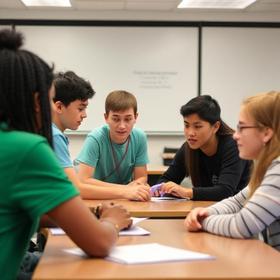
Cooperative Learning in 2025: Evidence, Best Practices & Challenges

Updated
|
Cooperative Learning in 2025: Evidence, Best Practices & Challenges
Explore cooperative learning in 2025—new data, updated practices, expert insights for educators and families.

Introduction

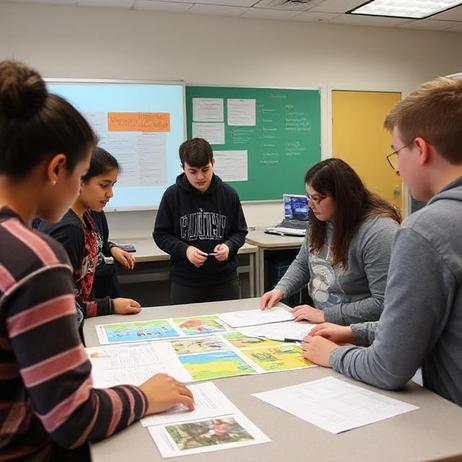
Cooperative learning—students working together in structured small groups toward shared goals—has long been a staple in progressive education. Over recent decades, its theoretical foundations, classroom practices, and outcomes have evolved. As of 2025, new research and technological shifts are reshaping how educators implement cooperative learning across K–12 and higher education classrooms.

In this refreshed review, we preserve the core structure and clarity of earlier presentations on cooperative learning, while weaving in the latest evidence, policy trends, and real-world examples. Our goal: to support parents, students, and educators in understanding how cooperative learning works today and how to leverage it for deeper engagement and achievement.

What Is Cooperative Learning?

At its heart, cooperative learning is more than just putting students into groups and having them “work together.” It is a deliberately structured instructional strategy in which a teacher designs learning tasks so that students must cooperate, depend on one another, and hold themselves individually accountable.

Johnson, Johnson, and Smith (1998, 2009) popularized a framework often taught in educator preparation programs, which emphasizes five essential elements of effective cooperative learning:

  1. Positive interdependence – students perceive that they sink or swim together.

  2. Individual accountability – each student contributes and is assessed on their contribution.

  3. Promotive (face-to-face) interaction – structured interactions that require dialogue, explanation, and reflection.

  4. Social skills

. . .read more

Recent Articles

Media Literacy as a Core Skill: How to Tell if a School Teaches It Well
Learn how to evaluate whether a public school teaches media literacy effectively, from fact-checking and source evaluation to digital citizenship and critical thinking.
Screen Time, Paper Learning, and the New Back-to-Basics Debate
Explore why some public schools are reducing screen time, bringing back paper learning, and rethinking the balance between technology and traditional instruction.
Student Data, AI Tools, and Privacy: Questions to Ask Your District
Learn how public schools use AI, protect student data, and the key privacy questions every parent should ask their school district in 2026.