Deprecated: Return type of Phpfastcache\Util\ArrayObject::offsetGet($offset) should either be compatible with ArrayAccess::offsetGet(mixed $offset): mixed, or the #[\ReturnTypeWillChange] attribute should be used to temporarily suppress the notice in /home/devzheng/workspace/psr/vendor/phpfastcache/phpfastcache/lib/Phpfastcache/Util/ArrayObject.php on line 106

Deprecated: Return type of Phpfastcache\Util\ArrayObject::offsetSet($offset, $value) should either be compatible with ArrayAccess::offsetSet(mixed $offset, mixed $value): void, or the #[\ReturnTypeWillChange] attribute should be used to temporarily suppress the notice in /home/devzheng/workspace/psr/vendor/phpfastcache/phpfastcache/lib/Phpfastcache/Util/ArrayObject.php on line 115

Deprecated: Return type of Phpfastcache\Util\ArrayObject::offsetUnset($offset) should either be compatible with ArrayAccess::offsetUnset(mixed $offset): void, or the #[\ReturnTypeWillChange] attribute should be used to temporarily suppress the notice in /home/devzheng/workspace/psr/vendor/phpfastcache/phpfastcache/lib/Phpfastcache/Util/ArrayObject.php on line 130

Deprecated: Return type of Phpfastcache\Util\ArrayObject::current() should either be compatible with Iterator::current(): mixed, or the #[\ReturnTypeWillChange] attribute should be used to temporarily suppress the notice in /home/devzheng/workspace/psr/vendor/phpfastcache/phpfastcache/lib/Phpfastcache/Util/ArrayObject.php on line 48

Deprecated: Return type of Phpfastcache\Util\ArrayObject::next() should either be compatible with Iterator::next(): void, or the #[\ReturnTypeWillChange] attribute should be used to temporarily suppress the notice in /home/devzheng/workspace/psr/vendor/phpfastcache/phpfastcache/lib/Phpfastcache/Util/ArrayObject.php on line 56

Deprecated: Return type of Phpfastcache\Util\ArrayObject::rewind() should either be compatible with Iterator::rewind(): void, or the #[\ReturnTypeWillChange] attribute should be used to temporarily suppress the notice in /home/devzheng/workspace/psr/vendor/phpfastcache/phpfastcache/lib/Phpfastcache/Util/ArrayObject.php on line 80

Deprecated: Return type of Phpfastcache\Drivers\Memcached\Item::jsonSerialize() should either be compatible with JsonSerializable::jsonSerialize(): mixed, or the #[\ReturnTypeWillChange] attribute should be used to temporarily suppress the notice in /home/devzheng/workspace/psr/vendor/phpfastcache/phpfastcache/lib/Phpfastcache/Core/Item/ItemExtendedTrait.php on line 438
Evaluating Public Schools

Evaluating Public Schools

This section provides tools to aid in finding the best public school option for your child. Compare private and public schools, explore school zoning issues, and delve into the public school grading and ranking system. Find information on the safest schools and what they are doing right.

View the most popular articles in Evaluating Public Schools:

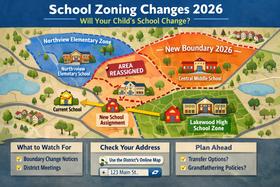
Public School Boundaries & Equity in 2026

Updated
|
Public School Boundaries & Equity in 2026
Explore how public school boundaries impact equity in 2026, including rezoning trends, housing patterns, and policy reforms shaping access.

Public School Boundaries & Equity in 2026

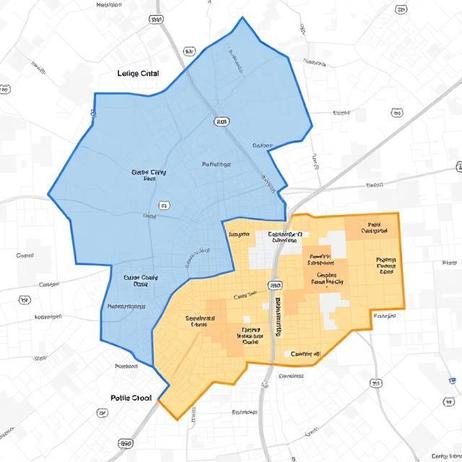
Public school boundaries and equity remain central to the national conversation about educational opportunity in 2026. Although public schools are designed to serve all students within a district, attendance boundaries often determine who has access to high-performing campuses, advanced coursework, and modern facilities.

For families, school boundaries can influence housing decisions, property values, and long-term academic pathways. For policymakers, boundary lines represent both a logistical necessity and a powerful equity lever. As demographic shifts, housing development, and enrollment trends evolve, districts across the country are reassessing how public school boundaries affect educational access.

This updated guide explains how public school boundaries work, why they matter for equity, and what changes are shaping policy in 2026.

How Public School Boundaries Work

Public school boundaries define which students attend specific schools based on where they live. Districts draw these lines to:

  • Balance enrollment across schools

  • Manage transportation logistics

  • Comply with state and federal regulations

  • Respond to population growth or decline

Most traditional districts assign students to neighborhood schools. However, some systems offer open enrollment, magnet programs, or controlled choice models that allow families more flexibility.

To understand how attendance zones interact with district structure, families may benefit from reviewing our guide on How School Districts Are Organized.

In 2026, boundary decisions are increasingly>
. . .read more

School Choice in 2026: What Public School Families Need to Know

Updated
|
School Choice in 2026: What Public School Families Need to Know
Explore community college scholarships with January deadlines for 2025–26. Key dates, eligibility tips, and expert advice to secure funding early.

School choice continues to reshape the public education landscape in 2026. Across the country, families are navigating open enrolment policies, charter school growth, education savings accounts, and inter-district transfers. At the same time, traditional public school districts are adapting to enrolment shifts and funding changes.

For parents, the expanding range of options can feel overwhelming. This guide explains how school choice works in 2026, how it affects public schools, and what families should consider before deciding.

What “School Choice” Means in 2026

School choice refers to policies that allow families to select educational options beyond their assigned neighbourhood public school. While definitions vary by state, the most common forms include:

  • Intra-district open enrolment, allowing students to attend another school within the same district
  • Inter-district open enrolment, permitting transfers across district lines
  • Public charter schools
  • Magnet schools with specialized programs
  • Education savings accounts, or ESAs
  • Voucher programs

The scope of these programs has expanded significantly. According to the National Conference of State Legislatures, more states have adopted or broadened choice initiatives in recent years, including universal or near-universal eligibility in some regions.

For public school families, the key question is not simply whether choice exists, but how it works locally.

Open Enrolment: Flexibility Within Public Schools

Open enrolment policies allow students to attend a public school other than their zoned campus, subject to space availability and district rules.

Intra-District Transfers

Intra-district transfers let families apply to another school within the same district. Common reasons include:

  • Access to advanced coursework
  • Specialized academic tracks
  • Smaller class
. . .read more

The ROI of Public High School in 2026: Which Programs Actually Improve College and Career Outcomes?

Updated
|
The ROI of Public High School in 2026: Which Programs Actually Improve College and Career Outcomes?
Which public high school programs deliver real college and career results in 2026? Compare AP, IB, dual enrollment, CTE, and early college outcomes.

For today’s families, evaluating a public high school is no longer just about test scores or graduation rates. In 2026, parents increasingly ask a sharper question: What is the return on investment?

ROI in public education is not about tuition costs. It is about outcomes. Does a school’s academic program meaningfully increase a student’s chances of college success, career readiness, and long-term earning potential?

Research from the U.S. Bureau of Labor Statistics continues to show that higher levels of education correlate with lower unemployment and higher lifetime earnings. But not all high school pathways equally prepare students to reach those outcomes.

Here is what the latest data and trends reveal about which public high school programs deliver measurable returns in 2026.

Defining ROI in Public High School

Return on investment in a public high school context can be measured through:

  • Graduation rates
  • College enrollment and persistence rates
  • Industry certification attainment
  • Dual credit accumulation
  • Workforce placement after graduation
  • Long term earnings indicators

Families can begin their evaluation by reviewing their state’s graduation trends, such as those outlined in Public School Review’s analysis of public high school graduation rates by state.

However, graduation alone is no longer the benchmark. The strength of a school’s academic pathways often matters more than the diploma itself.

Advanced Placement, AP: College Credit and Academic Rigor

Advanced Placement courses remain one of the most widely available academic accelerators in public high schools.

Why AP Can Deliver Strong ROI

  • College credit opportunities
  • Weighted GPA advantages
  • Demonstrated academic rigor for admissions
  • Reduced college
. . .read more

Special Education Services in Public Schools 2026 Guide

Updated
|
Special Education Services in Public Schools 2026 Guide
A 2026 guide to special education services in public schools, covering IDEA rights, IEPs, 504 plans, evaluations, and parent resources.

Special Education Services in Public Schools: Rights and Resources

Special education services in public schools are a cornerstone of equitable education in the United States. For millions of students with disabilities, these services provide access to individualized instruction, specialized support, and legal protections that ensure meaningful educational progress.

As of 2026, more than 7.5 million students receive special education services under federal law. While the framework is well established, implementation continues to evolve through updated guidance, inclusive practices, and increased attention to mental health and learning recovery.

This updated guide explains how special education services in public schools work, outlines student rights, and provides practical resources for families navigating the process.

The Legal Foundation: IDEA and Section 504

Two primary federal laws govern special education services in public schools:

  • The Individuals with Disabilities Education Act (IDEA)

  • Section 504 of the Rehabilitation Act of 1973

IDEA guarantees eligible students a Free Appropriate Public Education, often referred to as FAPE, in the Least Restrictive Environment. The U.S. Department of Education oversees IDEA implementation nationwide. Families can review the full statute and guidance at theIndividuals with Disabilities Education Act (IDEA).

Section 504, enforced by the U.S. Department of Education’s Office for Civil Rights, protects students with disabilities from discrimination and ensures reasonable accommodations. Guidance is available through theU.S. Department of Education Office for Civil Rights.

While IDEA

. . .read more

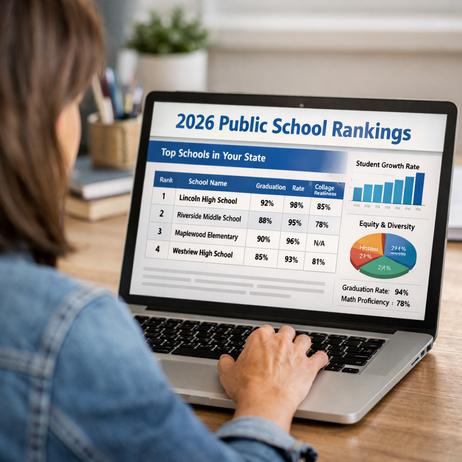
Public School Rankings: Are They Accurate in 2026?

Updated
|
Public School Rankings: Are They Accurate in 2026?
Are public school rankings accurate? Learn how rankings are calculated in 2026, what they miss, and how families can evaluate schools wisely.

Public School Rankings: Are They Accurate?

Each year, families across the country search online for the “best” schools in their area. Public school rankings promise quick answers, sortable lists, and easy comparisons. In a few clicks, parents can view a school’s position within their state, district, or even nationwide.

But are public school rankings accurate? And more importantly, do they tell the whole story?

In 2026, ranking systems are more sophisticated than ever. They draw on standardized test scores, graduation rates, college readiness indicators, and demographic data. Yet despite increased transparency and improved methodologies, school rankings remain an imperfect tool. Understanding how they work, and what they miss, is essential for families making high-stakes decisions.

How Public School Rankings Are Calculated in 2026

Most public school rankings rely on publicly available data reported to state education agencies and the federal government. Much of this information is collected through the U.S. Department of Education’s data systems and standardized testing programs.

Today’s ranking formulas typically include:

  • Standardized test scores in math, reading, and science

  • Graduation rates

  • College readiness indicators, such as AP or IB participation

  • Student growth metrics

  • Equity measures, including subgroup performance

  • Student-to-teacher ratios

For example, organizations such as U.S. News & World Report publish annual K-12 rankings

. . .read more

Recent Articles

Media Literacy as a Core Skill: How to Tell if a School Teaches It Well
Learn how to evaluate whether a public school teaches media literacy effectively, from fact-checking and source evaluation to digital citizenship and critical thinking.
Screen Time, Paper Learning, and the New Back-to-Basics Debate
Explore why some public schools are reducing screen time, bringing back paper learning, and rethinking the balance between technology and traditional instruction.
Student Data, AI Tools, and Privacy: Questions to Ask Your District
Learn how public schools use AI, protect student data, and the key privacy questions every parent should ask their school district in 2026.

Evaluating Public Schools

SCHOOL ZONING
Learn more about zoning rules, how they impact schools and your child. This section offers information on the history of school zones, what they are, and how they work. Get information on who decides school boundaries and the impact those decisions have on the community.
GETTING STARTED
An overview of school designations, best practices for evaluating your options, and tips on choosing the best school for your child. Learn about Blue Ribbon, Vocational and Special Education schools. Get tips on finding the right school in a new neighborhood, city or state.
GRADING AND RANKING SCHOOLS
Explore the public school grading/ranking system, how it works and what it means. Get latest national rankings and read what critics of school grading have to say. Take a look at the nation’s top performing schools as ranked by U.S. News and Newsweek.
PUBLIC SCHOOL SAFETY
A comprehensive look at the safety of US public schools. Learn what schools are doing to combat gangs and drugs, prepare for natural disasters, and protect your children from predators. From web cameras to armed guards, see what tools public schools are employing to keep kids safe.
PUBLIC VS. PRIVATE SCHOOLS
A comparison of public and private schools, the pros and cons of each, and a look at the cost of getting a stellar education at both. Take a look at some of the most expensive schools, notable public school alumni, and learn more about “private” public schools.