
Deprecated: Return type of Phpfastcache\Util\ArrayObject::offsetGet($offset) should either be compatible with ArrayAccess::offsetGet(mixed $offset): mixed, or the #[\ReturnTypeWillChange] attribute should be used to temporarily suppress the notice in /home/devzheng/workspace/psr/vendor/phpfastcache/phpfastcache/lib/Phpfastcache/Util/ArrayObject.php on line 106

Deprecated: Return type of Phpfastcache\Util\ArrayObject::offsetSet($offset, $value) should either be compatible with ArrayAccess::offsetSet(mixed $offset, mixed $value): void, or the #[\ReturnTypeWillChange] attribute should be used to temporarily suppress the notice in /home/devzheng/workspace/psr/vendor/phpfastcache/phpfastcache/lib/Phpfastcache/Util/ArrayObject.php on line 115

Deprecated: Return type of Phpfastcache\Util\ArrayObject::offsetUnset($offset) should either be compatible with ArrayAccess::offsetUnset(mixed $offset): void, or the #[\ReturnTypeWillChange] attribute should be used to temporarily suppress the notice in /home/devzheng/workspace/psr/vendor/phpfastcache/phpfastcache/lib/Phpfastcache/Util/ArrayObject.php on line 130

Deprecated: Return type of Phpfastcache\Util\ArrayObject::current() should either be compatible with Iterator::current(): mixed, or the #[\ReturnTypeWillChange] attribute should be used to temporarily suppress the notice in /home/devzheng/workspace/psr/vendor/phpfastcache/phpfastcache/lib/Phpfastcache/Util/ArrayObject.php on line 48

Deprecated: Return type of Phpfastcache\Util\ArrayObject::next() should either be compatible with Iterator::next(): void, or the #[\ReturnTypeWillChange] attribute should be used to temporarily suppress the notice in /home/devzheng/workspace/psr/vendor/phpfastcache/phpfastcache/lib/Phpfastcache/Util/ArrayObject.php on line 56

Deprecated: Return type of Phpfastcache\Util\ArrayObject::rewind() should either be compatible with Iterator::rewind(): void, or the #[\ReturnTypeWillChange] attribute should be used to temporarily suppress the notice in /home/devzheng/workspace/psr/vendor/phpfastcache/phpfastcache/lib/Phpfastcache/Util/ArrayObject.php on line 80

Deprecated: Return type of Phpfastcache\Drivers\Memcached\Item::jsonSerialize() should either be compatible with JsonSerializable::jsonSerialize(): mixed, or the #[\ReturnTypeWillChange] attribute should be used to temporarily suppress the notice in /home/devzheng/workspace/psr/vendor/phpfastcache/phpfastcache/lib/Phpfastcache/Core/Item/ItemExtendedTrait.php on line 438
Public School Articles - Page 87
Updated
|
Maryland Schools: Baltimore County Schools Have Segregation Issues
A new report shows that Maryland public schools, including those in Baltimore County, are still as segregated as they were during the 1980s, when desegregation was at its peak. We look at the impact segregation could have on public school students in this large district.

It may be assumed that segregation is no longer a significant problem for public schools throughout the United States. However, a recent study found that segregation is still very much alive and well in Maryland public schools. Despite efforts at the end of the last century to desegregate schools in the state, recent data suggests the efforts have come up short in ensuring an equal education quality for all Maryland students.

Educational Disparity in Maryland

The new research, which was compiled by the Civil Rights Project at UCLA, found that black students in Maryland attend public schools that are nearly as segregated today as they were during the desegregation efforts of the 1980s. Afro reports that during the 2010-2011 school year, more than half of all the African-American students attended schools with a strong majority of minority students. In addition, those schools had a much higher percentage of low-income students than schools that white students in the state primarily attended.

This video describes how over 5,000 teachers and educators signed up to march along with students and community leaders to push for more school funding in Annapolis, Maryland.

This discrepancy can lead to a serious disparity in educational quality. Schools with a high percentage of low-income and minority students tend to receive fewer resources and less experienced teachers than other schools in the area. At the same

. . .read more

New York City Schools: High Opt-Outs For Standardized Tests

Updated
|
New York City Schools: High Opt-Outs For Standardized Tests
The piece examines the significant increase in students opting out of standardized tests in New York City schools. It analyzes the reasons behind this trend, its implications for education policy, and the ongoing debate surrounding standardized testing in the city's education system.

New York City Schools: High Opt-Outs For Standardized Tests

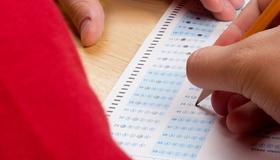
Standardized testing has become commonplace in schools nationwide, but not everyone believes in using testing to evaluate school and student performance. This year, several schools nationwide are seeing a higher-than-usual number of students opting out of the test protocol. One area that has been hit hard with opt-outs in recent weeks is New York City Public Schools. How will the higher number of opt-outs impact students choosing not to test and the schools where they are enrolled?

Some Students Say No to Tests

The Village Voice reports that test weeks this year are seeing fewer student participants in New York City. The publication cites reports of opt-outs at 22 schools throughout the boroughs, although the precise number of students opting out at each school is still unknown. It does appear that 33 students at the city’s Earth School have submitted their intentions to opt out of testing, which would comprise a significant percentage of the student body at that small school.

Parents and students are complaining of excessive stress caused by the standardized tests. They also question using valuable classroom time and resources to prepare for tests rather than quality instruction. Teachers are also protesting, stating that using standardized tests to evaluate teachers and schools is inappropriate and inaccurate.

The opt-outs in New York follow a decision by teachers at Garfield High School in Seattle, Washington, not to administer the tests

. . .read more

Rigorous High School Gives Underprivileged Students Hope for Future

Updated
|
Rigorous High School Gives Underprivileged Students Hope for Future
This article likely discusses a high school program that provides rigorous academic preparation for underprivileged students, aiming to increase their chances of college admission and future success. It probably highlights the school's methods, challenges, and the impact on students' aspirations and achievements.

Rigorous High School Gives Underprivileged Students Hope for Future

College is the future dream for many high school students, but that dream is more likely to become a reality for some students than others. Now, high school students in Newark have an option that can help them beat the odds and make that college dream a reality. Bard College has brought its proven track record of success to a Newark high school, offering students the chance to experience the rigors of college academics firsthand within the secure confines of a high school environment.

Bard High School Early College Newark

Bard High School Early College Newark (BHSEC Newark) is the latest in a series of college-based high schools created through Bard College. According to the BHSEC website, this school opened in 2011 as a partnership between the college and Newark Public Schools. BHSEC Newark offers a rigorous, college-level curriculum and traditional high school academics that prepare students for life after high school.

What makes the Newark school unique is its commitment to enrolling students from a diverse range of backgrounds, giving students the chance to excel academically who might not have the opportunity otherwise. Students come from all Newark neighborhoods, including disadvantaged areas like Newark’s West Ward, where drugs and shootings are almost a way of life for the young residents of the community. The New York Times reports that BHSEC Newark is positioned across the street from a tire shop

. . .read more

Changes Coming to GED

Updated
|
Changes Coming to GED
Discover how the GED test empowers individuals without a traditional high school diploma to unlock opportunities for further education and career success.

A new GED examination is coming to states nationwide, promising to better prepare students for the rigors of higher education or the 21st-century workforce. The update marks the largest change to the exam in its 70-year history, and not everyone is on board with the new product – or its higher price tag. Is the new GED a necessity to maintain a competitive workforce in America, or will it price some students right out of high school completion?

Need for Revamping

The Washington Post reports that the new GED examination is scheduled to be introduced on a national level in January 2014. The exam is currently in a pilot phase in select locations and has received positive reviews from many who have taken the new test. The test is designed to assess skills and knowledge that are more relevant to the 21st century, including critical thinking skills, a deeper knowledge of mathematics, and basic computer literacy.

“The content has been aligned with the Common Core State Standards,” Tiffany Cowie, public information officer for the Florida Department of Education, stated in a report from the Gainesville Sun. “The new test will reflect the knowledge and skills required for current graduates.”

The current GED exam is available in English, French, and Spanish. It covers five test areas: writing, reading, mathematics, science, and social studies. According to the website for GED Testing Service, the new exam will cover four test areas: literacy, mathematics, social studies, and science.

. . .read more

Florida Schools: Student Banned After Bullying Incident

Updated
|
Florida Schools: Student Banned After Bullying Incident
A judge has banned a student from attending any school in Duval County, after the student beat another student unconscious. Lawyers are fighting the decision, saying a full county ban prohibits the student from getting an education.

Bullying is, sadly, not an uncommon occurrence in middle schools across the country. However, the decision by a judge in Florida, in response to an extreme incident of bullying, is anything but ordinary. While some applaud the judge’s decision to take strict action against a bullying student, others wonder whether the judge went too far in his ruling. Was the judge fair in this case?

Bullying to the Extreme

The incident in question took place in Duval County, one of the largest school districts in Florida, and in the U.S. A student at Oceanway Middle School, Aria Jewett, was lured away from school grounds by a group of classmates. One of the students, Paris Cannon, allegedly dragged Jewett by the hair and slammed her head into a stone wall. She also slapped and kicked Jewett while Jewett was curled up on the ground in a fetal position.

According to First Coast News, Jewett was taken to the hospital by ambulance after the attack, where she was treated for life-threatening injuries, including a skull fracture and a severe concussion. Jewett also suffered contusions and abrasions to the scalp from the attack. She spent the night in the hospital before she was released to go home and recover.

Friends of Cannon were with the girls at the time of the attack, and one filmed the incident. The video showed Cannon's beating, as well as two other girls in the background, laughing and cheering Cannon on as it

. . .read more

Recent Articles

How Public Schools Train Staff Each Year
Learn how public schools train staff each year through professional development, safety training, technology instruction, and ongoing educational support.
What Substitute Teachers Experience in Public Schools
Discover what substitute teachers experience in public schools, including daily responsibilities, challenges, rewards, and their role in student success.
How Teachers Collaborate Across Departments in Public Schools
Learn how teachers collaborate across departments to improve student outcomes, strengthen instruction, and prepare students for real-world success.