
Deprecated: Return type of Phpfastcache\Util\ArrayObject::offsetGet($offset) should either be compatible with ArrayAccess::offsetGet(mixed $offset): mixed, or the #[\ReturnTypeWillChange] attribute should be used to temporarily suppress the notice in /home/devzheng/workspace/psr/vendor/phpfastcache/phpfastcache/lib/Phpfastcache/Util/ArrayObject.php on line 106

Deprecated: Return type of Phpfastcache\Util\ArrayObject::offsetSet($offset, $value) should either be compatible with ArrayAccess::offsetSet(mixed $offset, mixed $value): void, or the #[\ReturnTypeWillChange] attribute should be used to temporarily suppress the notice in /home/devzheng/workspace/psr/vendor/phpfastcache/phpfastcache/lib/Phpfastcache/Util/ArrayObject.php on line 115

Deprecated: Return type of Phpfastcache\Util\ArrayObject::offsetUnset($offset) should either be compatible with ArrayAccess::offsetUnset(mixed $offset): void, or the #[\ReturnTypeWillChange] attribute should be used to temporarily suppress the notice in /home/devzheng/workspace/psr/vendor/phpfastcache/phpfastcache/lib/Phpfastcache/Util/ArrayObject.php on line 130

Deprecated: Return type of Phpfastcache\Util\ArrayObject::current() should either be compatible with Iterator::current(): mixed, or the #[\ReturnTypeWillChange] attribute should be used to temporarily suppress the notice in /home/devzheng/workspace/psr/vendor/phpfastcache/phpfastcache/lib/Phpfastcache/Util/ArrayObject.php on line 48

Deprecated: Return type of Phpfastcache\Util\ArrayObject::next() should either be compatible with Iterator::next(): void, or the #[\ReturnTypeWillChange] attribute should be used to temporarily suppress the notice in /home/devzheng/workspace/psr/vendor/phpfastcache/phpfastcache/lib/Phpfastcache/Util/ArrayObject.php on line 56

Deprecated: Return type of Phpfastcache\Util\ArrayObject::rewind() should either be compatible with Iterator::rewind(): void, or the #[\ReturnTypeWillChange] attribute should be used to temporarily suppress the notice in /home/devzheng/workspace/psr/vendor/phpfastcache/phpfastcache/lib/Phpfastcache/Util/ArrayObject.php on line 80

Deprecated: Return type of Phpfastcache\Drivers\Memcached\Item::jsonSerialize() should either be compatible with JsonSerializable::jsonSerialize(): mixed, or the #[\ReturnTypeWillChange] attribute should be used to temporarily suppress the notice in /home/devzheng/workspace/psr/vendor/phpfastcache/phpfastcache/lib/Phpfastcache/Core/Item/ItemExtendedTrait.php on line 438
Public School Articles - Page 54
Updated
|
How to Help Your Child Succeed in and Out of School
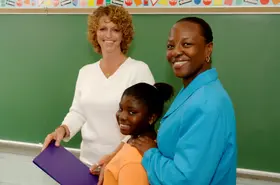
Your child’s education is not just his teacher’s responsibility. As a parent, you can supplement your child’s education at home to help him succeed in school.

Kids soak up knowledge from everything around them. Even before they step into school, you're their very first teacher, mom or dad! Learning doesn't stop with age - it's a lifelong journey. So, if you want your kid to be sharp and savvy, it's time to get serious about their education inside and outside the classroom.

When you ignite a passion for learning in your child, every day becomes a chance to discover something new. In this article, we'll dig into how you can help your kid make the most of their education.. We'll talk about tailoring learning to their style and adding extra learning at home. Let's dive in!

Understanding Your Child’s Learning Style

For many years, educators discussed the idea of “learning styles,” suggesting that children learn best through specific methods such as visual or auditory instruction. Today, research indicates that while students may have preferences in how they engage with information, effective learning usually involves a combination of approaches. Children benefit from seeing, hearing, discussing, and applying ideas in different ways. By observing how your child responds to different activities and working with their teacher, you can help support strategies that keep them engaged and reinforce learning both at school and at home.

Instead of focusing on rigid learning style categories, educators today often discuss different ways students engage with information. The following examples describe common ways children interact with learning activities.

  1. Visual (Spatial) – This style learns best when they have an image
. . .read more

Should Schools Screen for Childhood Trauma?

Updated
|
Should Schools Screen for Childhood Trauma?
Childhood experiences shape who we become as adults, for good and bad. The new Surgeon General of California is pushing for childhood trauma screening in students in the hopes of resolving some of the issues that might later lead to the development of physical and mental health problems.

Childhood experiences shape who we become as adults, for good and bad. The new Surgeon General of California is pushing for childhood trauma screening in students in the hopes of resolving some of the issues that might later lead to the development of physical and mental health problems.

The new Surgeon General of California is working to implement an unprecedented plan to implement universal screenings for childhood trauma in children benefiting from the state’s Medicaid program.

Dr. Nadine Burke Harris, the first person to hold the newly developed role of Surgeon General of California, is a pediatrician known for studying the harmful effects of adverse childhood experiences and toxic stress. The goal of the program is to identify children living with untreated childhood trauma so they can get the help they need and prevent harmful health effects from developing later in life.

Though Harris has already taken several steps toward implementing this plan, there are those who question its cost. Read on to learn more about the program and to explore the subject of childhood trauma in greater depth.

What Constitutes Childhood Trauma?

According to the American Psychological Association (APA), a traumatic event is one that threatens injury, death, or the physical integrity of self or others and also causes horror, terror, or helplessness at the time it occurs. Examples may include sexual abuse, physical abuse, school or community violence, domestic violence, accidents, medical trauma, national or manmade disasters, and traumatic loss.

The

. . .read more

How To Implement College Board Pre-SAT Programs

Updated
|
How To Implement College Board Pre-SAT Programs
This article guides educators and administrators in small, rural school districts on implementing the College Board's pre-SAT programs. It covers the PSAT Suite of Assessments and SAT prep with Khan Academy, addressing challenges unique to rural settings.

Implementing the College Board's pre-SAT programs in small, rural school districts can be a powerful way to enhance college readiness and access for students who often face unique challenges. As educators and administrators, understanding how to effectively integrate these programs is crucial for maximizing their benefits. In this article, we'll explore the steps needed to implement the PSAT Suite of Assessments and SAT prep with Khan Academy, addressing the specific challenges faced by rural schools.

Introduction

  • The College Board offers a range of programs designed to prepare students for the SAT, including the PSAT/NMSQT, PSAT 10, and PSAT 8/9.
  • These assessments, combined with SAT prep resources from Khan Academy, provide a comprehensive approach to college readiness.
  • For rural schools, these programs can be particularly valuable, as they help level the playing field by providing access to resources that might otherwise be out of reach.

Preparing for the PSAT Suite of Assessments

Implementing the PSAT Suite requires careful planning and coordination. Here are some key steps to consider:

PSAT/NMSQT

  • Test Administration: Schedule the PSAT/NMSQT during the school day, typically for juniors, to prepare them for the SAT and National Merit Scholarships.
  • Digital Format: Utilize the digital PSAT/NMSQT to streamline the testing process. This requires ensuring that your school's IT infrastructure can support the digital format, which offers faster scoring and more flexibility in administration.
  • Accommodations: Ensure that accommodations are available for students with disabilities, such as extended time or assistive technology. This may involve working with your IT team to
. . .read more

Common Mental Health Problems in School Children and How to Address Them

Updated
|
Common Mental Health Problems in School Children and How to Address Them
Millions of people struggle with mental health issues on a daily basis, but no one wants to think that these issues might affect children. As a parent, it is your responsibility to know what your child needs and to provide it. This includes identifying problem behaviors and seeking treatment when your child needs help.

It is a fact of life that children are sometimes going to break the rules. It’s also a fact that they’ll occasionally show an outburst of emotion or throw a tantrum in the middle of the grocery store. Childhood development is a trying time and children are often ill-equipped to understand or properly deal with the changes they’re going through.

But there is a point at which behavioral issues go beyond the point of being normal. If your child is becoming extremely withdrawn and avoiding social interaction, it might be something more. If your child is expressing angry or violent thoughts and behaviors, it might be something to worry about. Mental health is a difficult thing to gauge, but you can see the signs when your child exhibits behaviors that are abnormal for their personality or for other children of their age. It is your job as a parent to notice the change and to seek help.

In this article, we’ll explore the subject of mental health issues in school children. We’ll talk about the most common issues affecting children of school age and how parents and teachers can work together to identify those issues. We’ll also talk about what schools and parents can do to support these children.

This TEDx Talk discusses mental health in our schools.

How Common Are Mental Health Issues in Children?

According to the National Alliance on

. . .read more

What Parents Need to Know About Lunch Shaming

Updated
|
What Parents Need to Know About Lunch Shaming
Students all over the nation go hungry every day not because their schools don’t offer lunch, but because they refuse them to children with outstanding debts. Read on to learn about the horror that is lunch shaming and what can be done about it.

As an adult, you’ve well learned that while societal pressures still exist, it is, in fact, possible to say no to peer pressure. As a child in school, however, it feels like being liked and accepted is the most important thing in the world. No child wants to stand out too much, especially for the wrong reasons.Canon-McMillan School District

Unfortunately, underprivileged students are forced to fight this battle in a number of ways. From wearing hand-me-down clothing and sharing schoolbooks to enrolling in free lunch programs, it’s difficult not to stand out when you don’t come from the same economic background as more privileged students. In some schools, the differences are minimal and barely noticeable but children in many schools are experiencing something called lunch shaming and it may affect their education.

In this article, we’ll explore the subject of lunch shaming to discover what it is and how it affects public school students. We’ll also take a closer look at the incentives behind lunch shaming and what some people are doing to prevent it.

This video from PBS reports on the issue of lunch shaming.

What is Lunch Shaming, Anyway?

According to Feeding America, 16 million American children struggle with hunger each year. It may not be a daily battle, but at some point throughout the course of the year, these children lack the means to obtain nutritious food on a

. . .read more

Recent Articles

How Public Schools Train Staff Each Year
Learn how public schools train staff each year through professional development, safety training, technology instruction, and ongoing educational support.
What Substitute Teachers Experience in Public Schools
Discover what substitute teachers experience in public schools, including daily responsibilities, challenges, rewards, and their role in student success.
How Teachers Collaborate Across Departments in Public Schools
Learn how teachers collaborate across departments to improve student outcomes, strengthen instruction, and prepare students for real-world success.