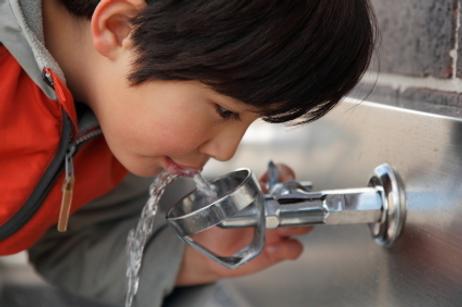
With concerns over the state of our educational system today, it seems there is yet another worry to add to the list: the safety of drinking water in schools. Recent reports of unsafe tap water in school districts across the country are alarming parents and school officials alike. Safeguarding our children's health now involves tuning into the potential dangers lurking in school plumbing systems.
AP Investigation
An Associated Press investigation has highlighted ongoing concerns about school drinking water following an investigation it launched over the safety of school drinking water from coast to coast. This investigation and more recent data confirm that contaminants continue to appear in drinking water at schools in all 50 states, according to a report on CBS News.
Unfortunately, the problem of safe drinking water remains inconsistently monitored across federal, state, and local agencies. This has allowed many school districts to run contaminated water through their systems for years, completely unchecked. The responsibility for ensuring safe water is spread thin among a variety of local, state, and federal agencies, limiting accountability and consistent standards.
"It's an outrage," Virginia Tech engineer Marc Edwards told CBS. "If a landlord doesn't tell a tenant about lead paint in an apartment, he can go to jail. But we have no system to make people follow the rules to keep school children safe?"
The AP study found the majority of problems were present at schools with wells, which is about 8-11% of the schools across the country. Environmental Protection Agency data has shown compliance challenges in school water systems, particularly in older facilities, indicating that it isn't only schools with wells that have students drinking unsafe water.
Other findings from the AP investigation include:
- About 100 school districts and 2, 250 schools breached federal safety standards for safe drinking water in earlier reporting periods
- States with the most violations include California, Ohio, Maine, Connecticut, and Indiana
- Many schools in California were found to be repeat offenders, with one school guilty of 20 violations
- Frequent contaminants included coliform bacteria, lead, copper, arsenic, and nitrates
While it is difficult to assess the specific health risks of children drinking contaminated water, there have been numerous reports of students becoming ill at school from the water. Due to the high cost of repairing plumbing systems that contribute to the problem, many schools are turning to bottled water and water coolers to keep students and staff hydrated during the day. However, this process can also become quite expensive, particularly for schools that are already strapped for cash due to extensive budget cuts.
Some schools are taking action to prevent illnesses due to potentially harmful tap water. These three areas have experienced illnesses that may be attributed to the public water systems. Unfortunately, two of the regions took action only after people fell ill. The third area acknowledges there is a problem, but has yet to address residents' concerns in many of its communities.
Recent data indicate that lead remains the most common contaminant found in school drinking water systems.
Saratoga Springs, Utah
A bacterial scare in this city has prompted schools in the area to shut off public water supplies, according to a report on ABC 4 News in Salt Lake City. Seven Saratoga Springs residents recently tested positive for Campylobacter bacteria, prompting school officials to take precautionary action until further tests on the tap water are completed. The schools are providing bottled water to students and faculty until the tap water is determined to be safe for use once again.
Flushing, New York
In recent years, reports have emerged of students becoming ill at PS 20 John Browne Elementary, and the tap water is suspected to be the culprit, according to a report on YourNabe.com. Work done on the air conditioning in the school may have resulted in contaminants entering the school's water system. More than 80 students were sent home early after drinking potentially tainted water, and ill students were placed on buses and taken to local hospitals for observation.
Nitrates in California
More than two million California residents may be drinking water dangerously high in nitrates, Circle of Blue Water News reports. California’s water supply has been exposed to harmful levels of nitrates for more than 15 years, possibly because farmers in the area use large amounts of nitrogen-based fertilizers to grow crops. Many schools in the area, which includes the metro area of Los Angeles, are dealing with the problem of unsafe tap water by purchasing bottled water for students and staff.
Safe drinking water is yet another worry for parents sending their children to school each day. Many provide water bottles to ensure their kids have safe water to drink. Some school districts are following suit by providing bottled water until tests can prove that water in the public systems is safe and contaminant-free.