
Public School Policies

From unions to vouchers, school budgets to discipline policies, we cover some of the most controversial issues affecting public schools today. Learn more about education reform and how it impacts your family. Keep current on the latest controversies regarding religion, sex-education, civil rights and more.

View the most popular articles in Public School Policies:

Overview of the Funding of Public Schools (2026 Guide)

Updated
|
Overview of the Funding of Public Schools (2026 Guide)
Learn how public schools are funded in 2026, including federal, state, and local sources, and what it means for equity and student outcomes.

Overview of the Funding of Public Schools (2026 Update)

Understanding the funding of public schools is essential for parents, educators, and policymakers alike. School funding shapes everything from class sizes and teacher salaries to extracurricular offerings and facility quality. While the basic structure of funding has remained consistent for decades, recent policy shifts, economic pressures, and post-pandemic recovery efforts have made 2026 an especially important moment to revisit how public education is financed in the United States.

This updated overview explains where school funding comes from, how it is distributed, and why disparities persist across districts.

The Three Primary Sources of Public School Funding

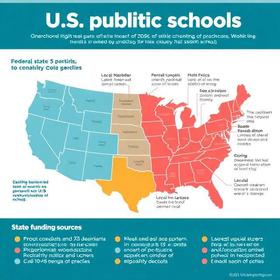
Public schools in the United States are funded through a combination of federal, state, and local sources. Each plays a distinct role, with varying levels of influence depending on the district.

1. Local Funding: Property Taxes and Community Wealth

Local funding remains the largest contributor in many districts, primarily through property taxes. Communities with higher property values generate more revenue, which often translates into better-funded schools.

Key characteristics of local funding:

  • Based on property tax assessments

  • Controlled by local school boards and municipalities

  • Highly variable between districts

This system creates significant disparities. Affluent areas can afford modern facilities, advanced coursework, and smaller class sizes, while lower-income districts may struggle to meet basic needs.

For a deeper look at how school quality varies by location, see Why Public School District Boundaries Matter.

2. State Funding: Equalization Efforts

State governments attempt to balance inequities through

. . .read more

How Public Schools Prepare for Emergency Situations

Updated
|
How Public Schools Prepare for Emergency Situations
Learn how public schools prepare for emergencies, including safety planning, drills, and modern security measures in 2026.

How public schools prepare for emergencies is a pressing question for families in 2026. Safety planning now goes well beyond a basic fire drill. Public schools are expected to maintain detailed emergency operations plans, train staff regularly, communicate clearly with families, and coordinate with local first responders. The U.S. Department of Education’s current emergency planning page points schools to high-quality emergency operations plan resources, while federal school safety guidance also emphasizes prevention, protection, response, and recovery.

For parents evaluating a school, emergency readiness is part of the bigger picture. Academic offerings matter, but so do practical questions: How does the school handle a lockdown, evacuation, severe weather alert, or reunification process after a crisis? PublicSchoolReview’s recent coverage of new public school safety protocols for 2025-26 reflects how much attention districts are now giving to communication, training, and layered safety systems.

Emergency preparedness starts with a formal plan

Every strong school safety program begins with a written emergency operations plan, often called an EOP. The Department of Education’s emergency planning resources and its guide collection for school emergency operations plans both emphasize that schools should build these plans collaboratively, with input from school leaders, district personnel, law enforcement, fire services, public health officials, and other community partners.

A well-developed plan typically addresses:

  • Evacuation procedures
  • Shelter-in-place procedures
  • Lockdown and secure-campus responses
  • Family notification systems
  • Student-parent reunification
  • Roles for teachers, administrators, nurses, counselors, and support staff

The most effective plans are not static documents kept in a binder. They are

. . .read more

Transitioning to Middle School: Summer Planning Guide

Updated
|
Transitioning to Middle School: Summer Planning Guide
A practical 2026 summer planning guide to help parents support a smooth middle school transition for their child.

The transition to middle school is one of the most significant academic and social shifts in a child’s education. For families, summer presents a critical window to prepare, reflect, and build confidence before the first day of school. Thoughtful planning during these months can reduce anxiety, improve organization, and set a strong foundation for long-term success.

This guide to transitioning to middle school offers practical, research-informed strategies for parents navigating this important milestone in 2026.

Why the Middle School Transition Matters

Middle school introduces structural and developmental changes that can feel overwhelming for students. Children move from a single classroom environment to multiple teachers, rotating schedules, and increased academic expectations. At the same time, they are navigating early adolescence, including social pressures and identity development.

According to the U.S. Department of Education, transitions between school levels are critical periods that can influence academic outcomes and student well-being. Proactive family support during this time can improve both confidence and performance.

Understanding What Changes in Middle School

Before creating a summer plan, it helps to understand what your child will encounter.

Academic Expectations

Students will typically experience:

  • Multiple teachers and classrooms
  • Increased homework and long-term projects
  • Greater emphasis on independent learning
  • Introduction to graded assessments and GPA tracking in some districts

Social Environment

Middle school brings:

  • Larger peer groups and shifting friendships
  • Exposure to extracurricular activities
  • Increased social dynamics, including peer pressure

Organizational Demands

Students are expected to:

  • Manage schedules independently
  • Keep track of assignments
. . .read more

School Vouchers 2026: Updated Pros and Cons

Updated
|
School Vouchers 2026: Updated Pros and Cons
Explore school vouchers in 2026, including updated pros, cons, policy changes, and what families should know before choosing.

School vouchers remain one of the most debated topics in American education policy. In 2026, the conversation has evolved significantly as more states expand school choice programs and families weigh new options beyond traditional public schools.

This updated guide to school vouchers 2026: updated pros and cons examines how voucher programs work today, what has changed in recent years, and what parents and educators should consider when evaluating their impact.

What Are School Vouchers?

School vouchers are publicly funded scholarships that allow families to use taxpayer dollars to pay for private school tuition, including religious schools in many cases. Instead of attending a zoned public school, eligible students can redirect funding toward participating private institutions.

Voucher programs vary widely by state. Some are targeted toward low-income families or students with disabilities, while others are becoming increasingly universal.

For a broader look at how public education systems operate, see this overview on how public schools are funded.

What’s New in School Vouchers for 2026?

The landscape of school vouchers has shifted rapidly over the past few years. Key updates include:

1. Expansion of Universal Voucher Programs

States such as Arizona, Florida, and Arkansas have expanded eligibility to nearly all students, regardless of income. These programs are often referred to as Education Savings Accounts (ESAs), offering even greater flexibility than traditional vouchers.

According to the National Conference of State Legislatures, more than a dozen states now offer some form of universal or near-universal school choice program.

2. Increased Legal and
. . .read more

Year-Round School Calendars: Pros, Cons, Research

Updated
|
Year-Round School Calendars: Pros, Cons, Research
Explore year-round school calendars, including benefits, drawbacks, and what academic research says about student outcomes.

Year-round school calendars have gained renewed attention as districts look for ways to improve student outcomes, reduce learning loss, and make better use of school facilities. Unlike traditional academic calendars with long summer breaks, year-round schooling redistributes instructional time across the entire year, typically through shorter, more frequent breaks.

For families exploring public school options, understanding how year-round schedules work and whether they improve academic performance is essential. This guide examines the structure, advantages, drawbacks, and what current academic research reveals about their effectiveness.

What Is a Year-Round School Calendar?

A year-round calendar does not increase the total number of school days. Instead, it reorganizes them.

Most public schools in the United States operate on a 180-day calendar. Year-round schools maintain that same number but divide it differently. A common model is the 45-15 schedule:

  • 45 days of instruction
  • 15 days of break
  • Repeated throughout the year

Some districts also use multi-track systems, where different groups of students attend school on staggered schedules. This approach helps address overcrowding without building new facilities.

Pros of Year-Round School Calendars

Reduced Summer Learning Loss

One of the most widely cited benefits is the reduction of summer learning loss, often called the “summer slide.”

Research and policy overviews highlight how shorter breaks can help reduce learning regression and support knowledge retention.

More Consistent Learning Pace

Frequent breaks allow students and teachers to recharge without losing academic momentum. This can lead to:

  • Improved focus during instructional periods
  • Reduced burnout
  • Better
. . .read more

Recent Articles

Test Article, Image and Content
Test Test Test Test Test Test Test Test Test Test Test Test Test Test Test Test Test Test Test Test Test Test Test Test Test Test Test Test Test Test Test Test Test Test Test Test Test Test Test Test Test Test Test Test Test Test Test Test Test Test Test Test Test Test Test Test Test Test Test Test Test Test Test Test Test Test Test Test Test Test Test Test Test Test Test Test Test Test Test Test Test Test Test Test Test Test Test Test Test Test Test Test Test Test Test Test Test Test Test Test Test Test Test Test Test Test Test Test Test Test Test Test Test Test Test Test Test Test Test Test Test Test Test Test Test Test Test Test Test Test Test Test Test Test Test Test Test Test Test Test Test Test Test Test Test Test Test Test Test Test Test Test Test Test Test Test Test Test Test Test Test Test Test Test Test Test Test Test Test Test Test Test Test Test Test Test Test Test Test Test Test Test Test Test
10 Major Challenges Facing Public Schools in 2026
Explore 10 major challenges facing public schools in 2026, from funding gaps to teacher shortages, with insights for parents and educators.
Overview of the Funding of Public Schools (2026 Guide)
Learn how public schools are funded in 2026, including federal, state, and local sources, and what it means for equity and student outcomes.

Public School Policies

EDUCATION REFORM
Education reform is in the works, and you can stay updated on the latest changes, debates, and policies here. Learn more about No Child Left Behind and how it impacts your child. Explore how federal and state government is working to improve school performance, student achievement and education standards.
TEACHERS AND UNIONS
A comprehensive look at teachers, tenure, and unions. Learn how unions impact school performance. Explore the impact of education reform on teaching qualification standards, traditional unions and controversial tenure rules.
PUBLIC SCHOOL BUDGETS
We offer an overview of public school budgets; where the money comes from, how it’s spent and what schools are doing to get more funding. Learn how schools are cutting budgets and how the cuts will impact your child. Delve into some of the creative ways school districts are trying to raise money and where the extra money is spent.
VOUCHERS
Explore both sides of the school voucher debate. Learn what your options are, how those choices are funded and the impact on your local school district. From the latest government initiatives to results from recent studies, explore vouchers and the options they provide.
SCHOOL DISCIPLINE POLICIES
Examine the various discipline methods being put to use in public schools. From detention to expulsion, spanking to handcuffing, school discipline can often be controversial. Does spanking work? Do police belong in schools? Learn more about what is being done to punish out of control students.
SCHOOL CONTROVERSIES
The most controversial issues impacting public school students today. From bullying to book bans, this is a comprehensive look at some of the most oft-debated issues. This section features articles on school segregation, religion, over-crowding, civil rights, and green technology.