
Deprecated: Return type of Phpfastcache\Util\ArrayObject::offsetGet($offset) should either be compatible with ArrayAccess::offsetGet(mixed $offset): mixed, or the #[\ReturnTypeWillChange] attribute should be used to temporarily suppress the notice in /home/devzheng/workspace/psr/vendor/phpfastcache/phpfastcache/lib/Phpfastcache/Util/ArrayObject.php on line 106

Deprecated: Return type of Phpfastcache\Util\ArrayObject::offsetSet($offset, $value) should either be compatible with ArrayAccess::offsetSet(mixed $offset, mixed $value): void, or the #[\ReturnTypeWillChange] attribute should be used to temporarily suppress the notice in /home/devzheng/workspace/psr/vendor/phpfastcache/phpfastcache/lib/Phpfastcache/Util/ArrayObject.php on line 115

Deprecated: Return type of Phpfastcache\Util\ArrayObject::offsetUnset($offset) should either be compatible with ArrayAccess::offsetUnset(mixed $offset): void, or the #[\ReturnTypeWillChange] attribute should be used to temporarily suppress the notice in /home/devzheng/workspace/psr/vendor/phpfastcache/phpfastcache/lib/Phpfastcache/Util/ArrayObject.php on line 130

Deprecated: Return type of Phpfastcache\Util\ArrayObject::current() should either be compatible with Iterator::current(): mixed, or the #[\ReturnTypeWillChange] attribute should be used to temporarily suppress the notice in /home/devzheng/workspace/psr/vendor/phpfastcache/phpfastcache/lib/Phpfastcache/Util/ArrayObject.php on line 48

Deprecated: Return type of Phpfastcache\Util\ArrayObject::next() should either be compatible with Iterator::next(): void, or the #[\ReturnTypeWillChange] attribute should be used to temporarily suppress the notice in /home/devzheng/workspace/psr/vendor/phpfastcache/phpfastcache/lib/Phpfastcache/Util/ArrayObject.php on line 56

Deprecated: Return type of Phpfastcache\Util\ArrayObject::rewind() should either be compatible with Iterator::rewind(): void, or the #[\ReturnTypeWillChange] attribute should be used to temporarily suppress the notice in /home/devzheng/workspace/psr/vendor/phpfastcache/phpfastcache/lib/Phpfastcache/Util/ArrayObject.php on line 80

Deprecated: Return type of Phpfastcache\Drivers\Memcached\Item::jsonSerialize() should either be compatible with JsonSerializable::jsonSerialize(): mixed, or the #[\ReturnTypeWillChange] attribute should be used to temporarily suppress the notice in /home/devzheng/workspace/psr/vendor/phpfastcache/phpfastcache/lib/Phpfastcache/Core/Item/ItemExtendedTrait.php on line 438
Parenting and Learning Issues

Parenting and Learning Issues

Each child learns differently. Here we offer resources on learning styles and the classroom models that support them, expert advice on how to improve learning, and tips on parental involvement.

View the most popular articles in Parenting and Learning Issues:

Will Your Child Need to Volunteer to Graduate?

Updated
|
Will Your Child Need to Volunteer to Graduate?
Learn about how public schools across the country are mandating community service hours in order to graduate.

Biology, algebra, English, and history classes are often no longer sufficient on their own for high school graduation in 2026. With steadily rising graduation standards, many school districts now require students to complete community service or service-learning hours before earning their diplomas. As a result, many teens are finding unique and engaging ways to become involved in their local areas.

This shift reflects a broader change in how educators define student success. Academic achievement remains central, but schools increasingly expect students to demonstrate civic awareness, social responsibility, and real-world engagement before graduation.

Volunteer Requirements Across School Districts

States and major districts, including Maryland and large urban systems such as Chicago and Los Angeles, have implemented or expanded community service expectations as part of graduation requirements. For example, Los Angeles Unified School District continues to require students to complete a minimum number of verified community service hours with approved nonprofit or government organizations in order to graduate.

These requirements are not uniform across the country. Some districts mandate a specific number of hours, while others integrate service into coursework through structured service-learning programs. In many cases, schools provide approved lists of organizations, digital tracking systems, and faculty advisors to help students complete their hours efficiently and meaningfully.

Schools implementing these service requirements report both immediate and long-term benefits for students. As students volunteer, they are exposed to different cultures, social settings, personal backgrounds, and new experiences. With these experiences, public students are able to add depth to

. . .read more

How to Save Money When Preparing for Prom

Updated
|
How to Save Money When Preparing for Prom
Parents and students can save money while preparing for prom with these savvy tips. Learn about what schools across the country are also implementing to help ease the burden of prom.

Whether our economy is growing or declining, high school prom is almost always guaranteed to be a costly event. With the price of tickets, the cost of renting a suit, buying a dress, paying for hair appointments, and even hiring fancy transportation, students often shell out hundreds of dollars for this ultimate high school dancing celebration.

To provide students who are struggling to scrounge up the cash for all of the prom’s accouterments, many schools and leaders are creating programs and groups to stimulate community-wide support. As prom allows soon to be graduates to celebrate their long paths of education, many school leaders assert that the students should be rewarded for their efforts without worrying over how to pay for all of the costs.

This video offers suggestions on how to save money prom expenses.

The Price for Prom

As proms have become increasingly more extravagant over the years, the price for students desiring to attend has similarly soared to often outrageous heights. As USA Today reports in their article, “Prom Costs HOW Much?”, many families are struggling to afford all of prom’s “necessities.” According to USA Today, a single night of prom can cost around $400 to even $3,000 and up! According to the report, students tend to add items to the prom tab that include:

  • $90 to $150 for transportation
  • $10 to $125 (and up) for prom tickets
  • $25 to $100 on cameras and photography
  • $70 to $250 on a rental tuxedo
  • $150 to $500 (and up) for
. . .read more

Should Public Schools Provide Teenage Parents with Daycare?

Updated
|
Should Public Schools Provide Teenage Parents with Daycare?
Learn about arguments behind the debate that currently exists between proponents and opponents of providing public school daycare for teen parents.

The debate over sex education in public schools has now been extended to the question of what schools should do after students choose to have sex.

According to recent reports, teen pregnancy is on the rise across the entire country. In fact, as Martinsville Bulletin reports in “Teen Birth Rates Soar,” the national birth rate among teens aged 15 to 19 has increased by 1.4 percent from 2006 to 2007. In total, this equates to 42.5 births for every 1,000 females in this age group.

With the rising rate of teenage pregnancy, many communities are being forced to debate over whether or not public schools should provide day care programs for teen parents. Many teenage parents, especially teenage moms, choose to drop out upon giving birth to their child. Therefore, some leaders assert that public school daycare programs can help decrease the propensity for some teen parents to not reach graduation. On the other side of the argument, many public leaders and community members believe that day care only encourages irresponsible sexual choices.

The Pros of Public School Day Care

As the Martinsville Bulletin further reveals, in areas of lower income and employment rates, teenage pregnancy rates tend to rise. For example, Henry County, located in Virginia, experienced a startling increase from 33.8 children for every 1,000 females to 40.9 children for every 1,000 females (under the age of 20) over the course of just

. . .read more

The Controversy Behind Banning High School Dances

Updated
|
The Controversy Behind Banning High School Dances
Learn about why school leaders are considering banning high school dances and what types of behavior and music are being contractually regulated.

While high school dances were originally established as an appropriate social outlet, dances today have evolved to push the limits of new boundaries. Current school leaders assert that the music played at dances is increasingly suggestive, while students’ dance moves have become more overtly sexual.

With the rise in questionable behavior and elicit dance moves at school events, many school leaders are banning dancing-based events, or in some cases, even prohibiting some students to attend. In an attempt to enforce modest conduct in co-ed interactions, schools are trying to navigate the fine line between students’ celebrations and misbehavior.

What’s the Big Dancing Debate?

While high school students may view their dancing and interactions as innocent and fairly commonplace, the observations through adult and school leaders’ eyes take in a much different understanding.

As SeaCoast Online News reveals in their examination of one local high school, the administration team of Exeter High School banned 19 of their students from a school-sponsored dance due to inappropriate dancing behavior. The dancing that was viewed by school leaders as offensive is commonly referred to as “grinding.” As SeaCoast explains, “This type of dancing, in which two dancers rub their bodies against each other in a sexually suggestive manner, has been a problem at the school for about a year.” Yet this problem is not solely an issue at just a handful of schools. According to school leaders, many administrators are beginning to ban specific songs during school dances in

. . .read more

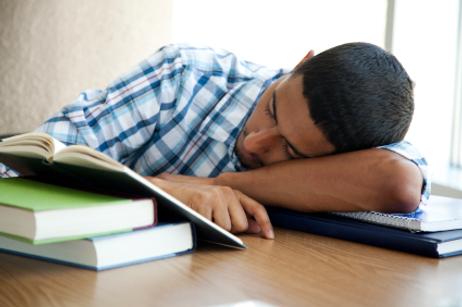
The Dramatic Link between Sleep and Student Performance

Updated
|
The Dramatic Link between Sleep and Student Performance
Learn about the important and interesting relationship between adequate sleep and how a student performs academically.

Despite protests from parents and teachers, many students adopt and embrace habits of insomnia during their essential school years. Especially in the middle and high school years, many young teens receive far less than the recommended average amount of sleep.

The National Sleep Foundation (NSF) suggests that all people—both teens and adults—should receive at least seven to eight hours of sleep each night. Despite this recommendation, however, studies show that most students receive less than 6.5 hours of sleep each night. According to experts, the amount of sleep a student receives during his or her school years ultimately influences the outcome of each student’s academic performance.

The Significance of Sleep

As reported by BC Heights, a 2007 study of sleeplessness revealed that a lack of sleep leads to an array of health problems. Specifically, a lack of sleep actually drops the number of white blood cells in the body. With a loss of white blood cells, the body’s immune system is also taxed and less powerful. In a 2007 study, as experts examined the influence of sleep in rats, scientists discovered that after significant and consistent sleep loss, the rats’ immune systems eventually completely failed.

While sleep helps restore our immune systems and bodies, the role of sleep in one’s academic abilities is a bit more unique. As the National Institute of Neurological Disorders and Stroke (NINDS) supports, sleep is not only necessary for survival, but for brain development and optimal

. . .read more

Recent Articles

Media Literacy as a Core Skill: How to Tell if a School Teaches It Well
Learn how to evaluate whether a public school teaches media literacy effectively, from fact-checking and source evaluation to digital citizenship and critical thinking.
Screen Time, Paper Learning, and the New Back-to-Basics Debate
Explore why some public schools are reducing screen time, bringing back paper learning, and rethinking the balance between technology and traditional instruction.
Student Data, AI Tools, and Privacy: Questions to Ask Your District
Learn how public schools use AI, protect student data, and the key privacy questions every parent should ask their school district in 2026.

Parenting and Learning Issues

IMPROVING LEARNING
A comprehensive look at the latest trends, expert advice and recent studies into improving student learning. Explore the latest studies into links between student performance, sleep and music. See why schools are opting for later start times and year round schedules.
PARENTAL INVOLVEMENT FROM K-12
Learn how direct involvement in your child’s education can impact school performance. Get expert advice on how to get involved, learn why and when you need to talk to a teacher and ways to make changes on campus.
BULLYING
An overview of bullying in schools, laws to protect students, and the impact on education. This section provides great tips on protecting your child from being bullied or becoming a bully. Learn about the latest anti-bullying laws and see how cyber-bullying effects your child’s school performance.
TYPES OF LEARNING
What type of learner is your child? Be in the know about different types of learning and which classrooms are best suited for each type. What is project-based learning? Cooperative Learning? Would your child benefit from a blended learning experience? Explore these teaching techniques and learn how they could improve your child’s performance.
KINDERGARTEN AND ELEMENTARY ISSUES
Weigh the pros and cons of preschool, full day kindergarten and other issues affecting our youngest learners. Learn what can be done to help your child prepare to enter school, boost confidence, and encourage reading at the grade school level.
HIGH SCHOOL ISSUES
Learn more about issues specific to high school students. Get an overview of high school graduation rates, college readiness, career choice and social issues impacting teenagers in public schools.