
Deprecated: Return type of Phpfastcache\Util\ArrayObject::offsetGet($offset) should either be compatible with ArrayAccess::offsetGet(mixed $offset): mixed, or the #[\ReturnTypeWillChange] attribute should be used to temporarily suppress the notice in /home/devzheng/workspace/psr/vendor/phpfastcache/phpfastcache/lib/Phpfastcache/Util/ArrayObject.php on line 106

Deprecated: Return type of Phpfastcache\Util\ArrayObject::offsetSet($offset, $value) should either be compatible with ArrayAccess::offsetSet(mixed $offset, mixed $value): void, or the #[\ReturnTypeWillChange] attribute should be used to temporarily suppress the notice in /home/devzheng/workspace/psr/vendor/phpfastcache/phpfastcache/lib/Phpfastcache/Util/ArrayObject.php on line 115

Deprecated: Return type of Phpfastcache\Util\ArrayObject::offsetUnset($offset) should either be compatible with ArrayAccess::offsetUnset(mixed $offset): void, or the #[\ReturnTypeWillChange] attribute should be used to temporarily suppress the notice in /home/devzheng/workspace/psr/vendor/phpfastcache/phpfastcache/lib/Phpfastcache/Util/ArrayObject.php on line 130

Deprecated: Return type of Phpfastcache\Util\ArrayObject::current() should either be compatible with Iterator::current(): mixed, or the #[\ReturnTypeWillChange] attribute should be used to temporarily suppress the notice in /home/devzheng/workspace/psr/vendor/phpfastcache/phpfastcache/lib/Phpfastcache/Util/ArrayObject.php on line 48

Deprecated: Return type of Phpfastcache\Util\ArrayObject::next() should either be compatible with Iterator::next(): void, or the #[\ReturnTypeWillChange] attribute should be used to temporarily suppress the notice in /home/devzheng/workspace/psr/vendor/phpfastcache/phpfastcache/lib/Phpfastcache/Util/ArrayObject.php on line 56

Deprecated: Return type of Phpfastcache\Util\ArrayObject::rewind() should either be compatible with Iterator::rewind(): void, or the #[\ReturnTypeWillChange] attribute should be used to temporarily suppress the notice in /home/devzheng/workspace/psr/vendor/phpfastcache/phpfastcache/lib/Phpfastcache/Util/ArrayObject.php on line 80

Deprecated: Return type of Phpfastcache\Drivers\Memcached\Item::jsonSerialize() should either be compatible with JsonSerializable::jsonSerialize(): mixed, or the #[\ReturnTypeWillChange] attribute should be used to temporarily suppress the notice in /home/devzheng/workspace/psr/vendor/phpfastcache/phpfastcache/lib/Phpfastcache/Core/Item/ItemExtendedTrait.php on line 438
Improving Learning

Improving Learning

A comprehensive look at the latest trends, expert advice and recent studies into improving student learning. Explore the latest studies into links between student performance, sleep and music. See why schools are opting for later start times and year round schedules.

View the most popular articles in Improving Learning:

Parent-Teacher Conferences

Updated
|
Parent-Teacher Conferences
We offer some tips for when, how, and how often to have a parent-teacher conference.

As parents struggle to navigate the balance of fostering their child’s autonomy, versus being actively involved, the timeliness and appropriateness of meeting with a child’s teachers is highly dependent upon a child’s age, his or her behavior, and potential special needs. Whether a child is gifted, struggling, or displaying average abilities play a large factor in determining when to intervene and meet with school leaders.

This video offers an example of a parent-teacher conference.

When to Meet with a Teacher

  • Collaborating Insights

If you have serious and pressing concerns about your child’s behavior, his or her academic progress, or other specific or general concerns, teachers can provide a great deal of insight into your child’s behavior. According to Terri Mauro, the author of The Everything Parent’s Guide, “If you have a pressing concern that needs to be addressed right away, don't delay in requesting a meeting yourself.”

Surprisingly, teachers may actually see your child at more constant time frames throughout the day than most parents; once kids are at home, they may play with friends away from supervision, or they may play in their rooms with the door closed. As a result, meeting with a teacher to find out his/her observations about your child’s behavior can help ameliorate concerns, and bring problems to the forefront, while working to brainstorm solutions for success.

  • Early Communication to Foster Success

According to the Child Development Institute, “The

. . .read more

Benefits of Foreign Language Education

Updated
|
Benefits of Foreign Language Education
Learn how foreign language education is beneficial to both elementary and high school students.

While the United States does not nationally mandate the study of a foreign language in public schools, many global schools around the world have incorporated such requirements long ago. In 2001, The Center for Applied Linguistics discovered that most countries have mandatory foreign language requirements for children beginning at eight years old. However, in the United States, most students do not begin to learn another language until ninth grade, or the age of fourteen.

For both young children and teenage students, the study of a foreign language, whether in supplemental or immersion classes, offers intellectual, social, and collegiate opportunities. As young children have the ability to develop language skills early, educators and psychologists are encouraging the instruction of foreign linguistic studies from an early age. In addition, according to researcher Julia Tagliere, “being able to speak another person’s language is a critical skill, especially as increased travel opportunities, satellite programming, and international use of the internet have begun to create a truly global community.”

In this TED talk John McWhorter outlines 4 reasons to learn a new language.

Foreign Language in Elementary School

Cognitive Benefits

Since the 1960s, studies have shown that the best time to begin the study of a foreign language is in elementary school. Because children at this age show better mental flexibility, more creativity, divergent thinking skills, and improved listening and memory skills, kids are able to

. . .read more

Uniforms: The Pros and Cons

Updated
|
Uniforms:  The Pros and Cons
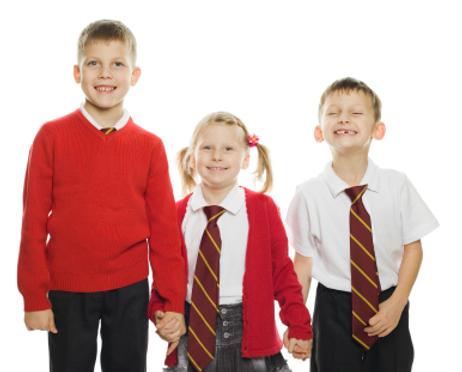
This comprehensive article explores the pros and cons of school uniforms in public schools. It discusses their impact on safety, learning environment, self-expression, and cost-effectiveness. The piece presents statistics, expert opinions, and arguments from both proponents and opponents, helping parents make informed decisions about uniform policies.

Uniforms: The Pros and Cons

The prevalence of uniforms in public schools continues to rise in the United States as parents and school administrators exert efforts to create safe environments in our schools.

  • According to the National Center for Education Statistics, nearly 20% of all public schools have adopted uniform mandates.
  • Approximately 22% of elementary schools, 19% of all middle schools, and 10% of high schools currently require uniforms, and this trend continues to accelerate.

Although uniforms have been a mainstay of private schools, public schools didn’t jump on the bandwagon until 1994, when the Long Beach California School District integrated school uniforms to address safety issues challenging the district.

  • According to the school district data, within one year after the implementation of uniforms, the fights and muggings at school decreased by 50%, while sexual offenses were reduced by 74%.
  • Across the country, similar statistics abound; for example, at Ruffner Middle School in Norfolk, VA, the number of discipline referrals decreased by 42% once uniforms were enforced.

Fueled by these statistics, more schools nationwide require uniforms in their public schools, naming school safety as their primary motivation.

  • Even with these compelling statistics, other statistics argue that uniforms are not as beneficial as school administrators and parents are encouraged to believe.
  • Opponents cite research that shows a lack of individualism and comfort among students, working to decrease student learning and success.
  • Thus, the question remains: are public school uniforms good for your child?
. . .read more

Recent Articles

Media Literacy as a Core Skill: How to Tell if a School Teaches It Well
Learn how to evaluate whether a public school teaches media literacy effectively, from fact-checking and source evaluation to digital citizenship and critical thinking.
Screen Time, Paper Learning, and the New Back-to-Basics Debate
Explore why some public schools are reducing screen time, bringing back paper learning, and rethinking the balance between technology and traditional instruction.
Student Data, AI Tools, and Privacy: Questions to Ask Your District
Learn how public schools use AI, protect student data, and the key privacy questions every parent should ask their school district in 2026.