In recent years, homeschooled children seem to be "winning." They have conquered national spelling bees, obtained generous scholarships to elite universities, and have even found success in a wide variety of academic, athletic, and extracurricular pursuits. If homeschooled kids are enjoying such success, it is understandable why any parent would ask, "Is regular school or homeschooling best for my child?"
Like many questions about your child's education, this particular one does not have an easy answer. It is important to consider many factors before deciding whether your child should stay at home to learn or should be sent to a regular public school.
Home Environment vs. School Environment
For many advocates of either homeschooling or public school education, the environment offered by either situation is the determining factor as to whether a child should be homeschooled or sent to a regular public school.
The Calm, Safe Environment of Home School
Proponents of homeschooling believe that children thrive better in a safe, comfortable environment with which they are familiar. Ironically, so do advocates of public schooling.
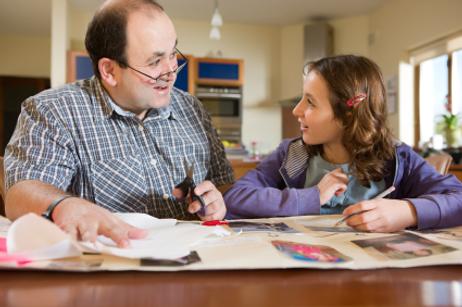
However, homeschoolers believe the home is the safest, most secure environment in which a child can learn. At home, a child does not have to deal with peer pressure or with fitting in with the popular cliques. A child can just "be." This gives the child the opportunity to focus on the lessons being taught and on the educational expectations required of him or her.
Orkid Jalali offers her take on the pros and cons of homeschooling your children.
Homeschooled students do not have to worry whether they are wearing the right clothes, the right shoes, shopping at the right stores, or playing the right video games. Since there are (usually) no other children around, homeschooled children learn in a relatively calm, peaceful environment and, most importantly, they usually have the opportunity to work at their own pace and in their own style. For some, that spells the difference between success and failure.
Today's homeschooling families also have access to online courses, homeschool cooperatives, dual enrollment opportunities, and community enrichment programs that can supplement instruction while maintaining the flexibility of learning at home. Parents interested in current homeschooling research and trends can learn more from the National Home Education Research Institute.
The Critical Social Component of Regular School
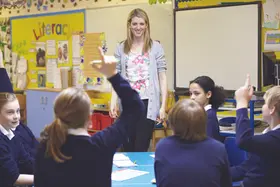
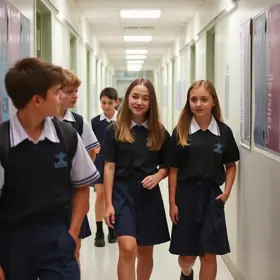
Regular public school classrooms are not, by nature, relatively calm environments, especially at the elementary school level. However, that does not mean a student cannot thrive in such an environment. In fact, supporters of regular public schooling argue that the chaos of the classroom is actually what children need to succeed.
Humans are social creatures. That is the belief of many regular public school proponents. Children should interact and work with one another in order to build real, vital skills needed in the real world. For example, advocates of regular public schooling believe that learning the reading process can certainly happen effectively at home. After all, they say, most kids do learn to read at home. However, the goal of public education is not to teach students simply how to read, solve math problems, or solve scientific equations. If that were the case, homeschooling would be the best option for everyone.
Parents interested in learning more about evaluating a school's overall environment may also enjoy reading How to Spot a School Climate Problem Before Enrolling.
The mission of regular public schools, supporters argue, is to teach kids those skills and then how to use and apply them through meaningful, necessary interactions with their peers and teachers. That, in essence, is the focus of many regular public schools: relationships. Those relationships can only truly be formed in regular schools. Students can only truly learn how to problem-solve with their peers if they are in a regular public school. Students can only learn how to handle and overcome peer pressure if they are faced with it in a regular school.
Parents evaluating a school's learning environment may also be interested in our article, How to Spot a School Climate Problem Before Enrolling. Families can also learn more about evaluating school safety by reading School Safety Beyond Lockdowns: What Parents Should Review.
Of course, this attitude held by many supporters of a regular public school may suggest that actual "book" learning is not as important as learning how to deal with others, but only you can decide which is more important to your child. Both environments clearly offer opportunities for children to learn, but only you can choose which kind of learning is most vital to you and your family.
Along with the environment in which they learn, students (and their families) also have to consider what they are going to learn. Homeschooling and regular public schooling have different philosophies about these elements as well.
Home Curriculum vs. School Curriculum
How children learn is a major factor in determining whether your child should stay at home or should go to school. Homeschooled children tend to learn through individual experience, and maybe that is best for your child. Public-schooled children learn through relationships, and that may be what your child needs. Clearly, this is one major difference between the two philosophies. Another vital component, though, is what they learn, and like before, there are significant differences between the two camps.
The Rockstar Homeschooling Mom explains her curriculum choices.
For the most part, children learn the same basic skills, whether they are homeschooled or taught at a regular public school. They all learn to read, write, and solve basic math problems. Both sides can agree that is a good foundation. However, it is beyond this common foundation that homeschool and regular school differ. With this in mind, you must evaluate where you want your children's education focus to be.
Parents who would like to learn more about public education standards and initiatives can visit the U.S. Department of Education.
Customizing Your Child's Education with Home School
Parents who homeschool their children generally get to decide by themselves the focus of their child's education. The curriculum can be developed around the passions of the parents, or around what the child has a natural curiosity for. In general, that is why most homeschooled children receive some type of religious instruction at home. The parents believe the teaching of religion or spirituality should be incorporated into education, and that is why many choose to teach their children at home.
This does not mean you can teach your kids at home only if you are going to teach them religion-based lessons. A homeschooled curriculum can take the shape of whatever the parent most wants to teach his or her child. Many families today also supplement their curriculum with online courses, homeschool cooperatives, museums, libraries, and community classes. Families interested in different approaches to homeschooling can also explore resources from the Coalition for Responsible Home Education.
Exposing Your Child to a Plethora of Ideas and Concepts
Regular public school is different, of course. Public schools, for the most part, base their curricula on state standards, and the lessons are geared so the students can reach and surpass those standards. There is usually not a lot of time to cover material in depth, but students are exposed to a broad range of ideas and concepts.
Therein stems the major difference between the curricula: the home curriculum usually takes fewer ideas to a deeper level, while the school curriculum usually takes more ideas and tries to connect them, hoping to show students the big picture. Public schools also offer many opportunities outside the classroom, including athletics, music, theater, career and technical education, Advanced Placement courses, dual enrollment, and student clubs that allow children to explore new interests and develop additional skills. Again, only you can decide which is the best approach for your child.
If you are considering a public school education, you may also enjoy reading 10 Advantages to Public Education. If you are preparing to enroll your child in a public school, our guide, A Parent's Guide to Public School Enrollment: Deadlines, Paperwork, and Common Pitfalls, offers practical advice for navigating the enrollment process.
You can also explore national education data and trends through the National Center for Education Statistics.
Conclusion
Homeschooling and regular public schooling each have advantages and disadvantages. One may offer a more controlled environment for your child, while the other may expose him or her to a world of ideas you could not possibly imagine. You may find it difficult to choose between the two.
Making the right choice depends upon how your child learns, and what you would like him or her to learn. Every child is different, and no single educational approach is right for every family. By carefully considering your child's learning style, personality, interests, and long-term goals, you can make the decision that best supports his or her success. Keeping the best interest of your child in mind makes the decision clearer.